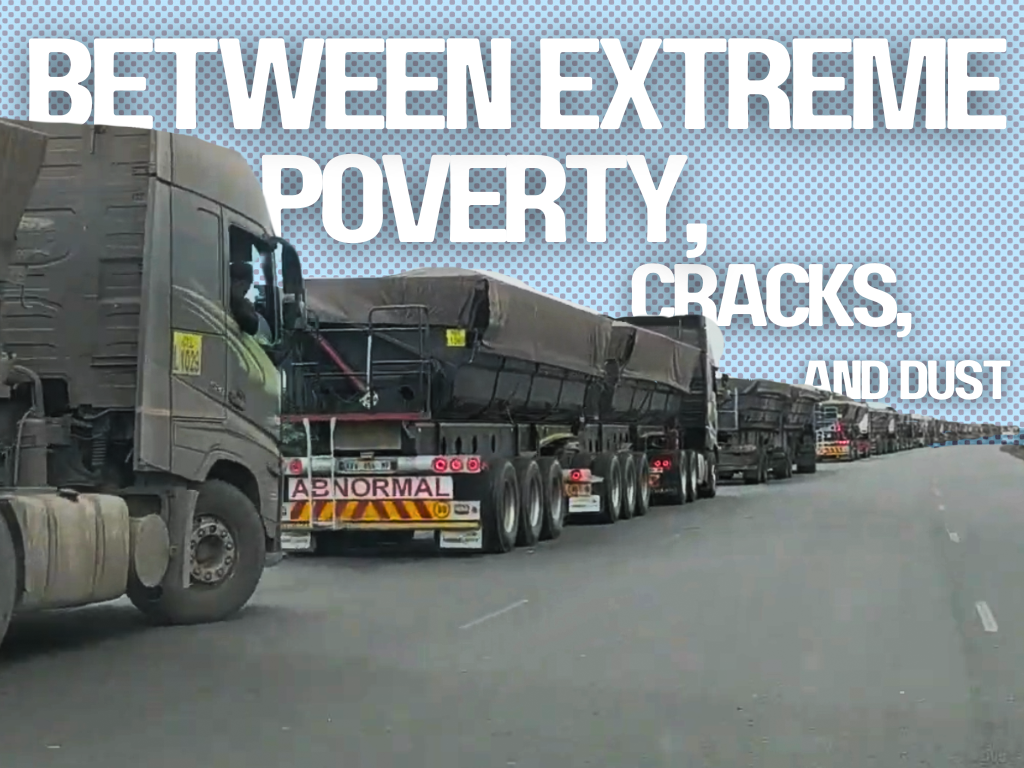
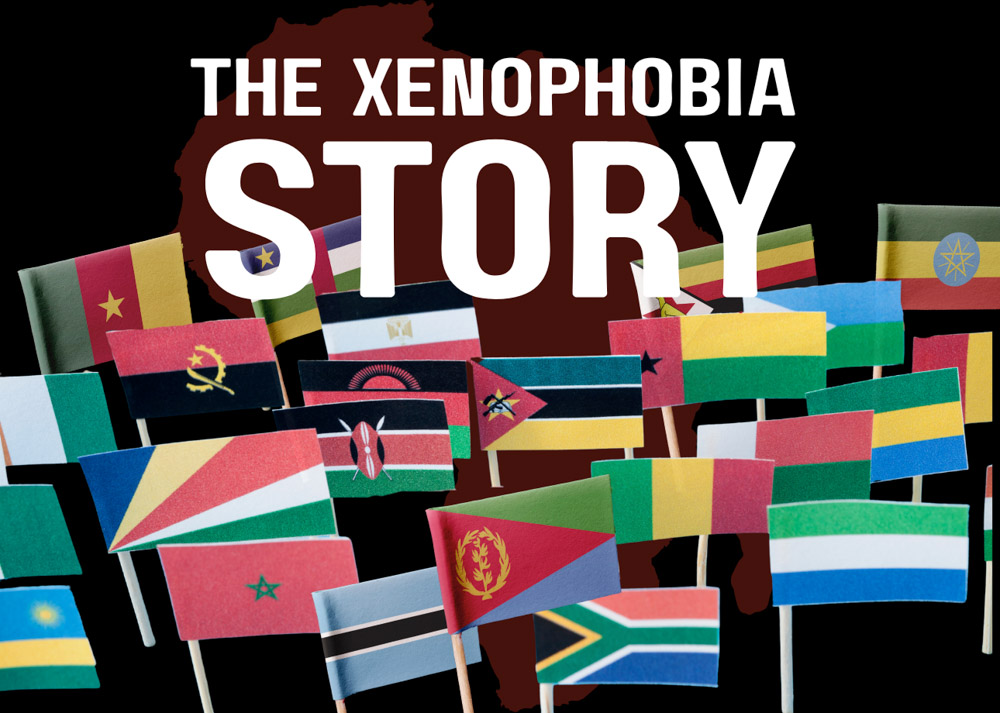
This winter in South Africa, which was summer in the global North, the world was shaken by images of mostly poor Black South Africans marching against often even poorer Black African immigrants, many of them undocumented. At times, the marches in townships and informal settlements turned violent. Ghettos within ghettos were “cleansed”, with Zimbabwean, Malawian and other African families and workers chased from their homes.
The images went all over the world. South Africa became the target of vociferous accusations. What was wrong with the Black people in that country? Had they forgotten Mandela? Discarded their own peace-loving ‘ubuntu’ principles? South Africa was jeered by supporters from other African nations at the World Cup and heavily attacked in Africa, including on social media. It was seen as a betrayal of the principles of Pan-Africanism. Some reports went further, suggesting that Black South Africans were as bad as whites.
Had they forgotten about Mandela?
A Dutch outfit — led by a woman so enthusiastic about ubuntu that she has even adopted “Nobuntu” as her middle name — cancelled its branded ‘ubuntu’ tours to SA, which traditionally teach white people how they can learn to really, truly love their neighbour. “I am because you are,” goes the ubuntu lesson: if I harm you, I harm myself.
The tours were suspended because some of the places to be visited had become the terrain of frightened Africans from neighbouring countries, huddled together after being chased from their homes by what was called the “March and March” initiative, freezing in the streets at night at 0 degrees, with nowhere to go. There were injuries, and some deaths.
South Africa’s heritage
It so happens that ZAM has quite a bit of South African heritage. Many of us are either wholly or partly South African, mostly, though not exclusively, of the Black variety. Some of our older colleagues remember the simple days of the anti-apartheid movement — quite literally a black-and-white theme, where it was easy to remember which side you were on. We tend to love the freedom-loving, creative South Africans who battle to turn their country into the multicoloured rainbow ideal that so many, including people worldwide, aspire to.
But the recent memories of our outreach and social media editor, who is half Mozambican, are more complex. “When I was younger” — he would be talking about the early 2000s — “I was told tales of what gruesome things South Africans, including in mob murders, have done to Mozambicans and other southern Africans searching for better opportunities in South Africa. There has been an understanding that we are not fully welcome. Or rather, that those of a lower economic class are not really welcome. I saw clips of Black South Africans chanting, ‘illegal foreigners steal our jobs.’”
But the same editor also realises that such sentiments are not exclusively South African. “It echoes what populists say about immigrants in other places. In Europe, too, the lower social classes are susceptible to fears that foreigners will crowd them out of housing, medical care, education.”
Many of the marchers live in poor ghettos
Except in South Africa, with its massive inequality between the rich, the poor, and the even poorer, South Africans who turn against foreigners have much, much more reason to feel done in. Many of the marchers live in squalid conditions far worse than those of the lowest-class European; poor ghettos contain even poorer ghettos, where the immigrants live.
Demanding legality
Which is why our fully South African project coordinator feels so tired that her “tired is tired”, she writes, about the bad press her compatriots have been getting. Isn’t it true that people are frustrated to the point of breaking, that, 30 years after what was called a liberation that came with so many promises, hospitals and schools are not getting better but more crowded? That education and healthcare are scarcer and scarcer, and that yes, you do at times find a foreigner in the hospital bed you had hoped for? That our very South African array of crime syndicates, traditionally homegrown, now also counts Nigerian and Pakistani gangs? How is it bad to demand legality and proper governance?
Many people who accused the South Africans who marched were coming at this from a position of privilege, she says. “They do not live in areas where people compete for scarce resources and battle with sometimes life-threatening problems. Remember that the March and March appeal started after 23 children died after ingesting illegal foodstuffs from illegal tuck shops. The issue for many outraged people was not that these foodstuffs or their marketers were foreign, but the illegality of them. We are simply not protected by our government from illegality. The appeal that people responded to in March and March was for law enforcement and border management, including the management of food imports and food standards.”
Leaders of failed countries should not point fingers at South Africa
She quotes Africans living in Europe who point out on social media that they have to show their passports and visas wherever they go, and asks why SA should be any different. She then follows up with the more poignant question of accountability among leaders in the countries where vulnerable, undocumented immigrants come from. Why should certain countries that are perceived as offering better futures have to cater for citizens from countries where leaders are doing badly? Some high-profile African personalities, like former President Ian Khama of Botswana, have stated that leaders of failed countries cannot point fingers at SA when their citizens run away.
Our project coordinator feels bad for the vulnerable people who were chased from their homes and made to sleep outside in the winter cold, she says. “But I saw Malawians in the street outside their own Malawian embassy, and the embassy remained closed! Why is Malawi not helping its own citizens?”
Militancy is often bred in poverty
In response, our half-Mozambican editor, reflecting later, also understands that militancy is often bred in poverty. “In Mozambique, militants have also attacked neighbours, invading villages in the north and cruelly victimising people standing in their way. They found fertile ground for recruits in regions most abandoned by the government.” Why had the right “intuitions” — that people are people, and that many will lash out when tormented — “not kicked in previously?” he asked. Why had notions of the kind, lovely South Africans he knows suddenly taken a backseat?
“Interests of a handful”
South African activist Pregs Govender, in a Daily Maverick article quoted by our half-South African photo editor, also emphasises the good hearts of most South Africans. “There are living embodiments of love all around us [in SA],” she writes. “In the millions who use their low wages and social grants to keep alive family, friends and neighbours, who would otherwise be dead; in the people working every day against the local impact of a global system built on unemployment and precarious employment, corporate greed and bureaucratic corruption, and which commodifies rights. We are fortunate that there are those who work every day on rights to land, housing, education, health, food, water, transport, safety, work and economic policy that upholds life instead of destroying it in the interest of a handful.”
In the same article, Govender notes that this “interest of a handful” — the hand of “Empire”, as she calls it — has been at play in the “March and March” actions. She points to the stages, sound installations, the supercars in which the protagonists arrived, the extensive travel of the same protagonists, and the bots that swamped social media. This was organised, she says. Many others have observed the same.
There was no hard evidence to underpin the multiple allegations that the “March and March” events were funded by staunch pro-Israel and pro-US lobbyists known to donate vast sums to anti-immigrant parties in South Africa, such as MK, now the home of former President Jacob Zuma, and ActionSA. Indeed, the ruling-party politicians who blamed “foreign interference”, a deflection from their own accountability that was somewhat convenient, did not produce evidence to back their statements.
“Empire” probably licked its lips at this opportunity
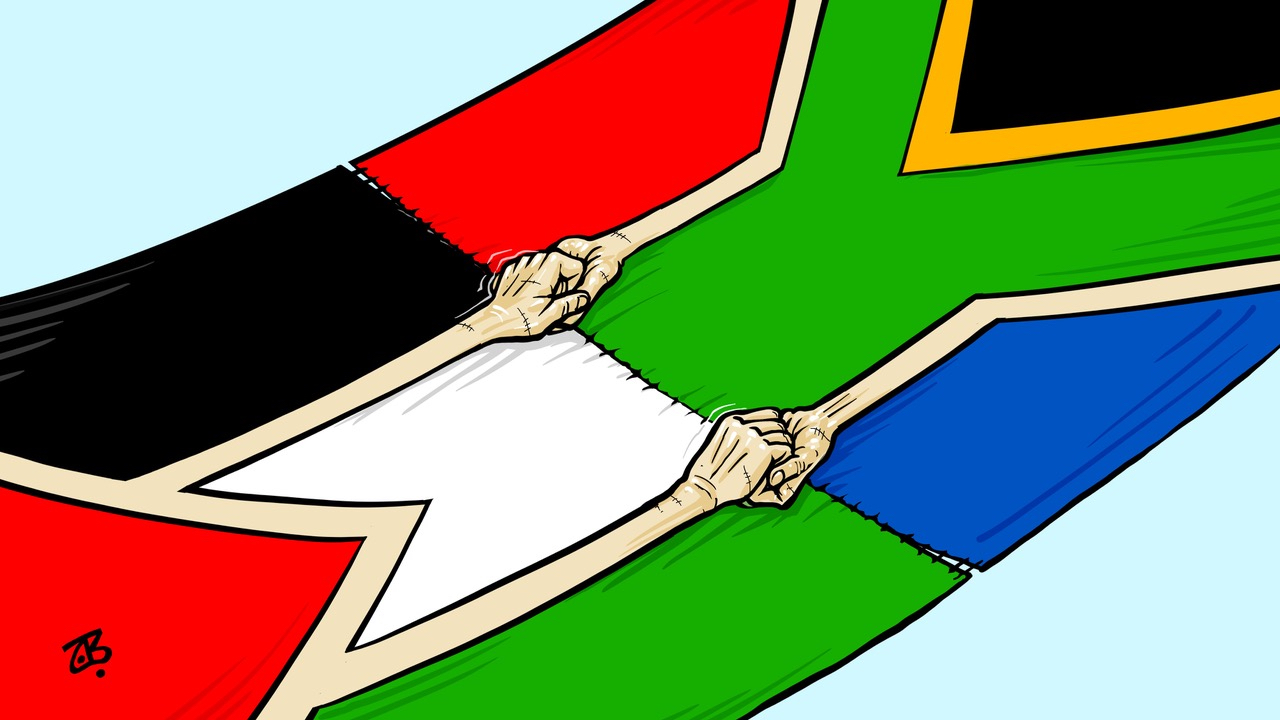
But ‘Empire’ probably did lick its lips at the opportunity to punish South Africa. The Times of Israel, still seething at the country’s Palestinian genocide case at the International Criminal Court, had, just before the “March and March” actions, openly called for the “fragmentation” of the country, apartheid-style, back into tribal homelands. In its 2 January article, it even advocated for the rest of Africa to follow. “Africa must fragment, South Africa first”, it headlined, arguing that “South Africa must lead the way for fragmentation… for historical, ethno-cultural homelands, such as those of the Zulu, Xhosa, Tswana, Sotho, Venda and Tsonga, along with the Western Cape”.
Meanwhile, the USA’s Trump administration was also still angry at SA, holding fast to its unfounded narrative of an anti-white genocide in South Africa, for which the Black-led government should be sanctioned.
Such lobbies would welcome a dent in SA’s international standing. And how better to achieve that than by stirring Black South Africans’ frustrations into a frenzy that would prompt the world to tsk-tsk: what do these Black people get up to when left to govern themselves?
A strange activist
The role of activist Nkosi Zulu at the head of “March and March”, walking in the first line, waving a Palestine flag and wearing a keffiyeh, also raised many an eyebrow. On his Instagram, Zulu congratulated “March and March” leader Jacinta Ngobese and wrote that South Africa was “under siege” from immigrants who were preparing to “take over” the country. He was also overheard drawing comparisons between African immigrants and Israeli settlers. “This is choosing the side of the coloniser (…) (We) vehemently disagree with this position,” an activist’s comment on one of Zulu’s posts read.
Like the others in our team, our project coordinator also shares the uneasy feeling that there has been a hand behind the scenes stirring up trouble. “Suddenly, there was an anti-Muslim wave on social media. Ordinary South Africans would not go for that. And where did these two Ghanaians who went to the ICC to accuse SA of ‘xenophobia’ come from?”
Nevertheless, while ‘Empire’ might very well be behind the organised campaign, it is also true that nobody can stir a cauldron when there is no cauldron to stir. Because our project coordinator is right. There is a problem of scarce resources and painful social ills, faced mainly in formerly Black-only and still Black-only areas by poor South Africans and immigrants alike. Overcrowded and underserviced hospitals, schools, ghettos.
The persisting, vast inequality in South Africa, with wealth mainly distributed among whites and a ruling-party-connected elite that flaunts its mansions, mining shareholdings, and bank board positions alongside Empire, makes “March and March” protagonist Jacinta Ngobese Zuma of the MK party (1), a spoilt child of the same elite, a prime example of hypocrisy. It also makes the politicians who pointed fingers at “foreign interference”, as if that absolved them of all accountability, disingenuous.
Festering wounds
The new rulers have made a mess of government, for many reasons too complex to analyse here, but certainly including sharp elbows in the tussle for post-apartheid power and a strong sense of “our turn to eat”. Fair wealth redistribution, social justice and the roll-out of citizens’ services are still pipe dreams; state institutions meant to oversee and implement them have been hollowed out and corrupted. Border management is run by a criminalised force that works with syndicates of whatever hue and happily accepts bribes for paperwork.
Ills are connected to centuries of trauma
As observed by the Times of Israel, other African countries in the post-colony also suffer from such ills. What the Times of Israel ignores is that still-festering wounds after centuries of disempowerment and trauma, made worse by continuing plunder by global systems in cahoots with local elites, will do that. In that context, the fact that only 12 out of 120 marches turned violent and 109 were peaceful, our project coordinator says, shows that most South Africans, even those who marched, are simply human beings who want to be listened to.
“They are fed up with a government that doesn’t listen, doesn’t manage borders, doesn’t discipline corrupt officials who let everyone in for a bribe,” she says.
But hate can be stirred up amid trauma and directed against the “other”. Our photo editor writes about the “othering” that she literally feels in her own persona: part Dutch and descended from colonisers, part African, with a legacy of oppression. “The word ‘apartheid’ itself comes from the Netherlands,” she writes. “The history of colonialism, slavery and apartheid not only segregated people but also severed them from their cultural heritage and lineages. The Europeans created different notions of identity [in South Africa], acting as if this was the only truth, while building a global capitalist world on it.”
Racialised capitalism
She quotes the words in Zimbabwean academic Panashe Chigumadzi’s Nelson Mandela Lecture that “capitalism is always racialising (and) racialisation is always capitalising.” In line with this thought, our photo editor rejects the ‘boxes’ of who is an immigrant, who is illegal or the ‘other’ as a Western colonial notion of identity or nationality, saying: “This notion is not African.” She writes that she hopes for an end to capitalist racialisation, and hopes that this end may come soon. “My mother always reminds me in darker times that things always get worse before they get better. I think we are there right now, the West feeling its grip and influence on Africa loosening.”
“We are at a breaking point, and we will break out of this,” she writes. “Because ubuntu really is in our DNA.”
ZAM’s vision is of a “world with no them and no us”
The ideal of a world where “racialised capitalism” has been overcome and all colours and ethnicities share resources may still be somewhat in the future, if such an ideal is to be achieved at all. But it does reflect ZAM’s vision of “a world with no them and no us”. This motto binds us here on this web platform, little as we may be, but with huge aspirations indeed. And the question of what we must do to bring that ideal even a little bit closer has consumed all of us during the writing of this article.
We differ on the how. Some of us lean towards campaigning for public-interest governance everywhere and at all times, within properly managed borders and with attention not only to one’s own nation but also to the impact that nation has on others. Why not engage with governments of countries where many of the undocumented come from, like Malawi, Zimbabwe and Mozambique? Why not hold these leaders accountable for the misgovernance that drives citizens to desperate border crossings? The same question, incidentally, might be asked of the West, which is currently engaged in deals with dictators in the Global South to dump migrants in so-called “return hubs”, sometimes overseen by the same dictators who chase away their own citizens.
“Borders are not ancient truths”
Others, like our South African text and arts editor, agree with our photography colleague that we need fewer, rather than more, borders. “The borders that define belonging across southern Africa are not ancient truths, but colonial constructions,” they write, “imposed upon older networks of kinship, movement and mutual dependence. The logic that once separated people by race now too easily persuades us to separate ourselves by nationality, asking the dispossessed to see one another as the source of their dispossession.”
Resistance and courage
While they feel that “the instinct to rise against injustice” should be treasured and that the inheritance of struggle against oppression in SA “remains one of our greatest strengths”, they also emphasise that “the deepest victories are secured when resistance refuses the invitation to hate” and that “it takes greater courage to identify the forces that profit from division than to turn against those who stand within reach.” They call for the exposure of the “institutions that have failed to uphold the dignity, equality and public trust” of citizens and note South Africans’ “enduring capacity to organise, to care and to imagine otherwise.”
"We possess the power to transform history”
This moment, they conclude, and indeed, don’t we all, “should be seized to build a new civic consensus founded on justice, shared responsibility and repair. We have already demonstrated that we possess the power to transform history. The challenge before us is to direct that power not towards one another, but towards the unfinished work of building the society we have long promised ourselves.”
To many, SA is, and remains, a kind of lab for the entire world in this endeavour. It is, after all, “the world in one country”, as the old South African tourist slogan goes. An article by Africa Is a Country editor William Shoki highlights that tens of thousands of South Africans and their organisations remain inspired by the rainbow ideal and “call for anger to be directed at the state and capital, not at migrants”. Among these, Shoki notes, are local neighbourhood committees that patrolled and protected foreign-owned shops and commuters, churches offering sanctuary, and traditional leaders publicly denouncing attacks.
In the end, Shoki writes, South Africa needs to “build an idea of shared progress that starts by meeting people’s basic, material needs (…) And if it were as simple as writing that sentence (…) we wouldn’t be here. We are here precisely because that work is hard, slow, and has mostly failed.”
A need for facts
That work might, incidentally, benefit from a search for cold, hard facts that, as so often, have been tragically missing from the entire hot winter. How many undocumented immigrants are actually in SA? Would hospitals really be much more spacious, cleaner and better stocked if they were not there? How many unemployed South African citizens found jobs after an estimated 50,000 undocumented individuals were deported? How do we set about organising this country better, so that, at some hopefully not too distant point in the future, it can really serve as an example to emulate for a “rainbow” world?
Meanwhile, we learn from the dedicated LinkedIn page that the Dutch Ubuntu Tours to South Africa will resume in November.
(1) See a profile of Ngobese here
Call to Action
ZAM works towards a new equal relationship between Africa and Europe. Contribute to our mission by donating.