A new ZAM series of three photographic stories
ZAM’s roots lie in the anti-apartheid solidarity movements that connected the Netherlands and southern Africa. At the time, images helped carry the realities of apartheid across borders, making attention itself a form of political engagement. That work remains vital to what we do. But what happens when the image that makes a country visible also narrows what we can see?
A new ZAM series explores how photojournalism can expose injustice while also attending to the nuances that rarely make headlines. It begins from the premise that photography can do more than document the world; it can deepen our understanding of how people inhabit it.
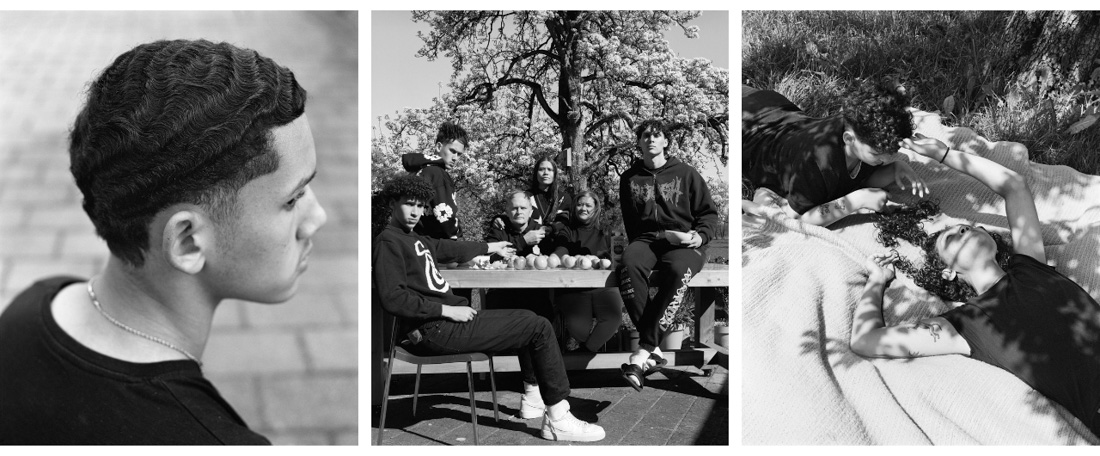
At the outset, we consider three photographic projects that approach South Africa from different perspectives. At FNB Art Joburg, held at the Sandton Convention Centre from 4 to 6 September 2026, the Alf Kumalo Estate and MBR Projects presented Women’s March to Freedom, revisiting Kumalo’s photographs of the historic 1956 march. In Durban, Sabelo Mlangeni’s Honeymoon. The Happily Ever After?, featuring five years of photographs made eThekwini, remains on view at KZNSA Gallery until 2 November 2026. From 26 November 2026 to 26 January 2027, Returning Home, a new interpretation of a photographic project initiated by Santu Mofokeng and Paul Weinberg in the late 1980s, will be presented at the 15th Rencontres de Bamako, the African Biennale of Photography.
Then and now
Each project has its own concerns. Kumalo’s photographs preserve a defining moment of collective resistance to apartheid. Mlangeni turns his attention to the intimacies, pleasures and contradictions of contemporary Durban. Returning Home revisits Going Home, the original project through which Mofokeng and Weinberg explored what it meant to return to places shaped by segregation, displacement and inequality. Moving beyond the spectacular image of political confrontation, the project attended to everyday life and the social relations through which people make and remake a sense of belonging. Together, these exhibitions offer distinct ways of seeing South Africa, bringing its histories and complexities into sharp view.
A continent is not defined by what is broken, stolen or destroyed
For ZAM, this series marks the beginning of a more deliberate editorial commitment to the arts and their capacity to change how Africa is seen and understood. Investigative journalism remains central to our work, and vital to exposing abuses of power, tracing injustice and holding those responsible to account. But a steady diet of crisis can leave the imperial impression that the continent is defined by what is broken, stolen or destroyed. We do not want to look away from the harsh realities. We want to place them within the truer context of the fullness of African life. One that also pays attention to the people imagining alternatives, building communities, re-making culture and constantly creating fresh possibilities for the future.
Making the unseen known
Photography is a point of departure, not a limit. Every image can draw a boundary around what can be seen. Beyond it lies what the frame cannot capture — the lives that continue beyond the image, indifferent to whether or not they have been witnessed. Perhaps the work begins with a suspicion of the single image, with the recognition that no photograph can encompass the whole story, and that what remains unseen has its own ways of making itself known.
Part 1: Alf Kumalo | The Women’s March to Freedom
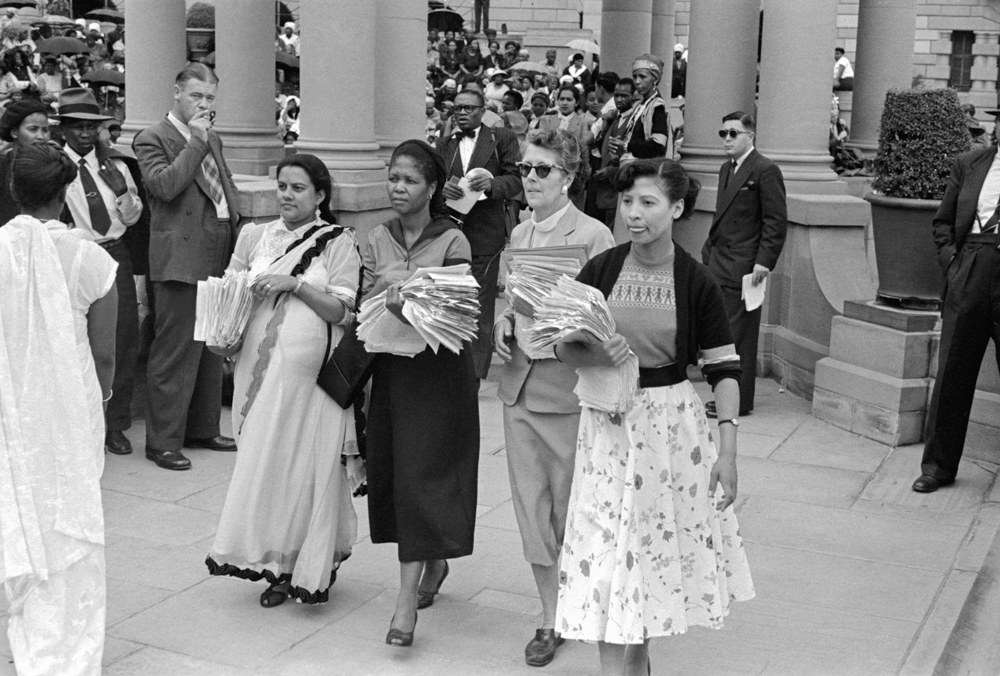
On 9 August 1956, more than 20,000 women marched to the Union Buildings in Pretoria to protest against the apartheid government’s pass laws. Led by Lilian Ngoyi, Helen Joseph, Rahima Moosa and Sophia Williams-De Bruyn, they delivered petitions bearing more than 100,000 signatures. The march was a defining act of collective political resistance, and the photographs documenting it have become integral to South Africa’s national memory.
Seventy years on, The Women’s March to Freedom, presented by MBR Projects and the Alf Kumalo Estate at FNB Art Joburg, revisited the historic march through the work of one of South Africa’s most consequential photojournalists. Alongside iconic images and lesser-seen material, affordable prints made Kumalo’s archive accessible to a new generation of South Africans interested in art and history.
More than struggle icons
But what happens when an image becomes so familiar that we stop noticing what it contains? For Siwa Mgoboza, curator and co-founder of MBR Projects, revisiting Alf Kumalo’s archive means looking beyond the figures who dominate popular memory of the liberation struggle. “We would like the story to not just be about Winnie,” Mgoboza explains, referring to Winnie Madikizela-Mandela, “as there were so many other women who were influential in this protest and leading up to it, and thereafter.”
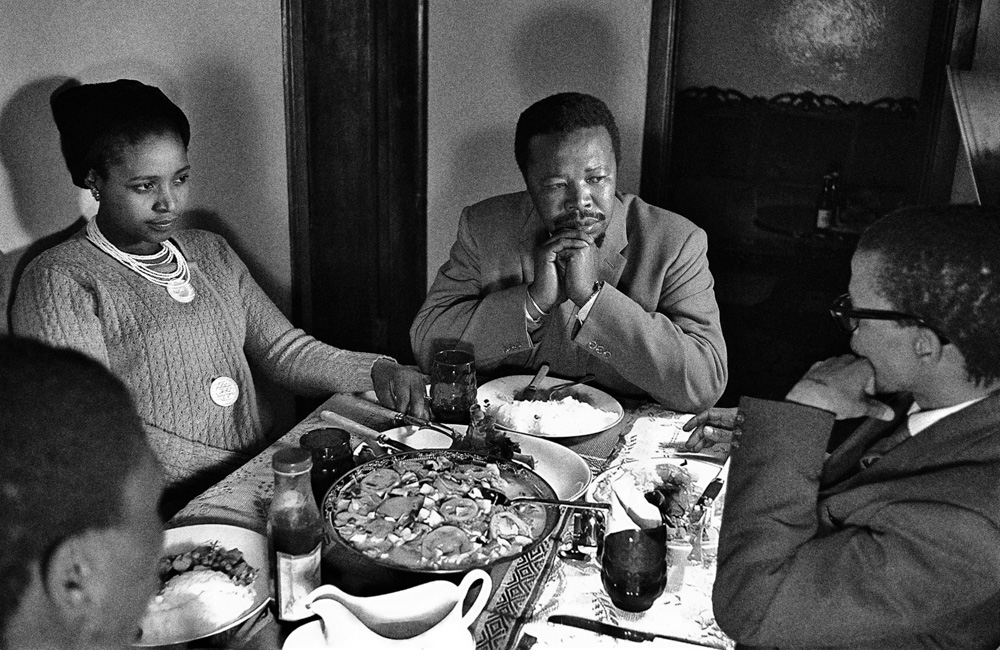
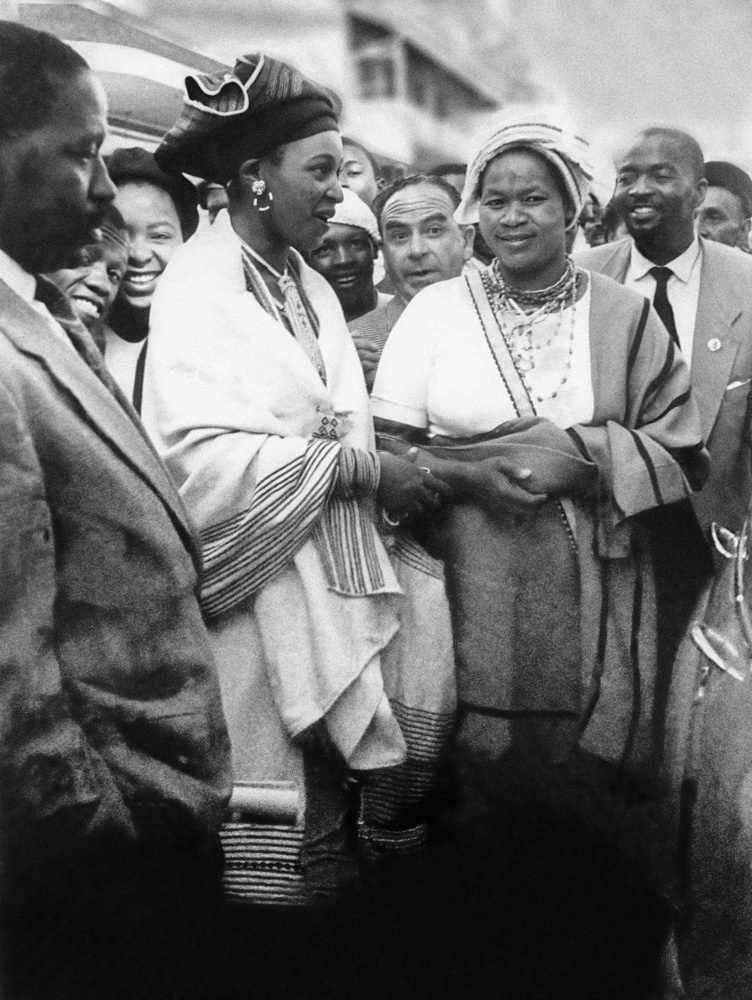
Alf Kumalo’s photograph of Winnie Madikizela-Mandela, Prince Dalindyebo of Thembuland and journalist Harry Mashabela during the prince’s visit to Johannesburg transforms a crowded dinner table into a site of political encounter. The tight framing and stark contrasts of light and shadow heighten the tension between the intimate setting and the press gathered around its occupants. At the centre, Winnie holds her composure amid the cameras, connecting the domestic sphere to the wider struggle against apartheid. Hospitality, political solidarity and media attention converge, turning the home into a space where resistance becomes visible.
They are styled, expressive and socially present
Kumalo photographed a world that the familiar visual grammar of apartheid often excludes: one in which women are not only figures of resistance or witnesses to suffering. They are styled, expressive and socially present. Their appearance and bearing communicate something of how they wished to meet the world, even under a system designed to constrain their lives. There is flair here, but also ease and audacity. Women appear not simply as symbols of courage, but as people making lives together, finding pleasure and sustaining one another. These details are not incidental to the history. They are part of what freedom meant, and what the struggle fought to protect.
Private sacrifices
As writer Matthew Blackman observed during a conversation about MBR Projects’ work with the estate, newspaper editors have historically favoured the most dramatic frame: “This is the shot. This is the most sort of [...], violent.” The consequence is that other forms of experience become less visible. “Meanwhile, there was life happening, you know, ordinary life.”
He describes this neglected territory as “the unphotographed middle”, borrowing a phrase associated with photographer Martin Parr to describe the vast field of human experience that rarely seems extraordinary enough to warrant a picture. Kumalo’s archive brings this middle into view. It holds suffering and mourning alongside happiness, music, domestic life and celebration. The struggle was not separate from these experiences. It unfolded within them.
“Meanwhile life was happening”
Reconsidering Alf Kumalo’s archive also means looking beyond the heroic image of the photojournalist who was always present when history happened. When I asked what the archive would not show us, his daughter, Nonhlanhla Kumalo, recalled the personal cost of that commitment. His work often took precedence over family, sometimes leaving his children waiting while he covered an event he could not bear to miss. “You’re not going to see his sadness when his kids, at some point or other in their lives, have to say to him, ‘Why do you prioritise everyone else but us?’” she reflected. Her account reveals the private sacrifices and unresolved tensions behind a life devoted to documenting the lives of others.
These memories do not diminish Kumalo’s commitment. They bring it down to a human scale, raising a question that runs through the archive: who bears the cost of a person’s generosity to the world?
A woman’s work
There is something complicated about encountering these women through Alf’s lens. I wondered what it means to look at women through a man’s eyes, and how his relationships with women might inform our reading of his photographs. I put the question to Nonhlanhla, asking about her father’s understanding of women. “His respect for women, I think, comes from his mother. I didn’t meet my paternal grandmother, but he really loved and respected her for everything she did for him and his siblings, how she understood him and how she loved him. His respect for women came from the women in his life. It was a learning process. He wasn’t born with this respect and understanding.”
One afternoon, Nonhlanhla recalls, her father played Sammy Davis Jr.’s song “She Is a Woman, W-O-M-A-N”, which he believed celebrated women. Her mother disagreed. As Nonhlanhla remembers it, the song described a woman performing an extraordinary range of domestic tasks, from washing socks, ironing shirts and cooking to feeding the baby, greasing a car and managing household accounts, all with apparent grace and devotion. Her father heard praise; her mother heard an indictment. “She said, ‘Case in point: you’re making us listen to the song while you’re sitting in the house and we’re outside doing the garden,’” Nonhlanhla recounts.
The anecdote is funny, but it exposes a familiar contradiction: women can be celebrated for their contributions while still being expected to perform the labour that makes everyone else’s lives possible. In an exhibition centred on a march whose historical significance can overshadow the fuller lives of its participants, Alf’s photographs invite us to see these women as more than symbols of resistance. They were organisers, workers, parents, intellectuals, lovers and people negotiating competing demands on their time. Their agency did not start or end when the shutter clicked.
Beyond the image
Kumalo’s work also complicates the assumption that the photographer’s task was simply to record the violence of apartheid. He was not an outsider looking in, but part of the social and political world his archive preserves. “Alf would document, but he’d put down the camera and get back into the struggle with the people. Hence why he himself got arrested several times,” Nonhlanhla says. Mgoboza adds, “And injured.”
The photographer himself had freedom of movement that others did not
Nonhlanhla recalls stories of her father’s access to political spaces during apartheid. As a photojournalist without a formal political affiliation, he sometimes enjoyed freedom of movement denied to others. During the interview, she and her interlocutors discussed the possibility that he had helped transmit material connected to political resistance. Such accounts require careful verification, but they point to the broader significance of his position: a photographer’s access could carry responsibilities beyond making an image.
Shared history
Nonhlanhla describes her father’s wish for the archive to continue educating people and preserving history, while also generating income to support future generations of his family. His legacy, in her account, is not a monument to be left untouched, but a body of work that must remain accessible, useful and capable of sustaining those responsible for it.
Mgoboza similarly emphasises the responsibility involved in working with an estate. “What does it mean now when we are taking on these stories and saying, hey, here is our shared history. Let’s look at it together?” Shared history does not mean an erasure of disagreement or difference, nor does it suggest that all South Africans occupy equivalent positions in relation to the past. Rather, it asks whether the country’s visual memory can make room for more than a familiar cast of heroes and victims.
The Women’s March was an iconic event in South African history, and its photographs deserve to be remembered. But remembering is not the same as repeating a limited interpretation. To return to Kumalo’s images is to notice the women absorbed into the crowd, the domestic labour behind public achievement, the integrated cultural lives that continued alongside repression, and the family relationships that sustained a public hero’s commitments, but sometimes suffered because of them.
The women marched. Decades later, we are learning how to see them
The photograph has a peculiar way of enduring. The women in Kumalo’s image are beyond dispute. Yet, their place in history remains strangely provisional, as though their complexity must still be verified by some office that has misplaced the necessary papers. They marched, and that was recorded. The record is secured. One might assume the matter settled. And yet we are compelled to return to the image, again and again, looking for what has been there all along. Wondering why something so plainly visible should remain so difficult to see.
Stay tuned for the next instalment in this series: Sabelo Mlangeni’s Happily Ever After?