Image elements sourced through Canva. Design by ZAM
“We don’t know what is true, because everyone in the country has been silenced.”
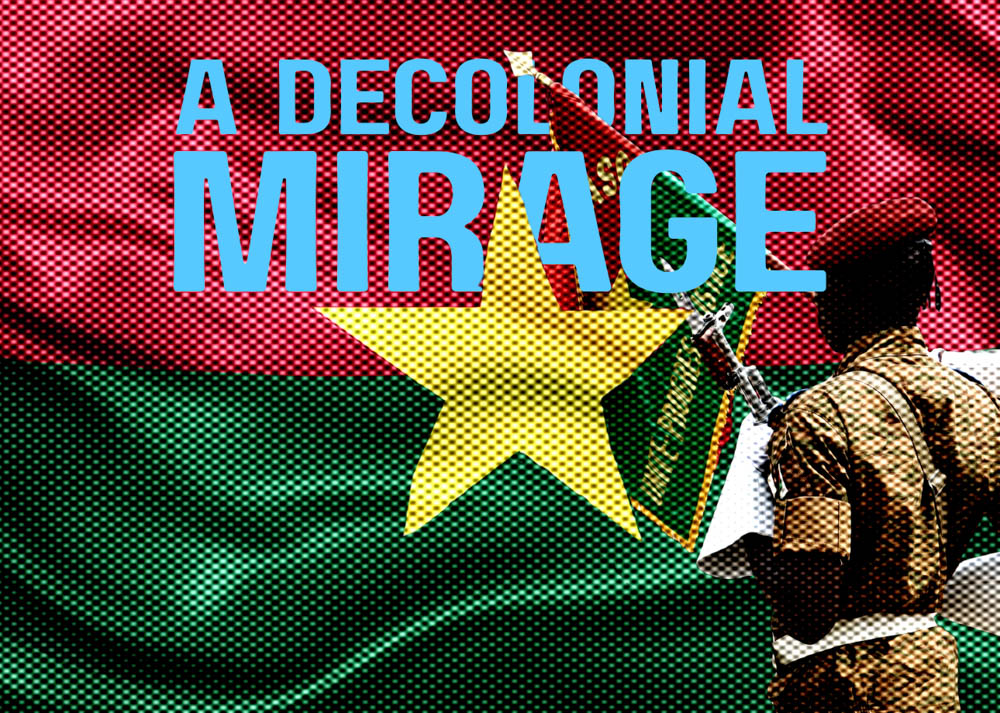
To many young Africans online, Burkina Faso’s leader, Captain Ibrahim Traoré, represents the hope of African governance free from the influence of extractive foreign and neo-colonial powers. His speeches and messages reflect laudable revolutionary measures, such as the nationalisation of resources and developmental plans. The information in these speeches and messages, however, all comes from the same single source: Burkina Faso’s now Russia-aligned military junta, headed by Captain Ibrahim Traoré.
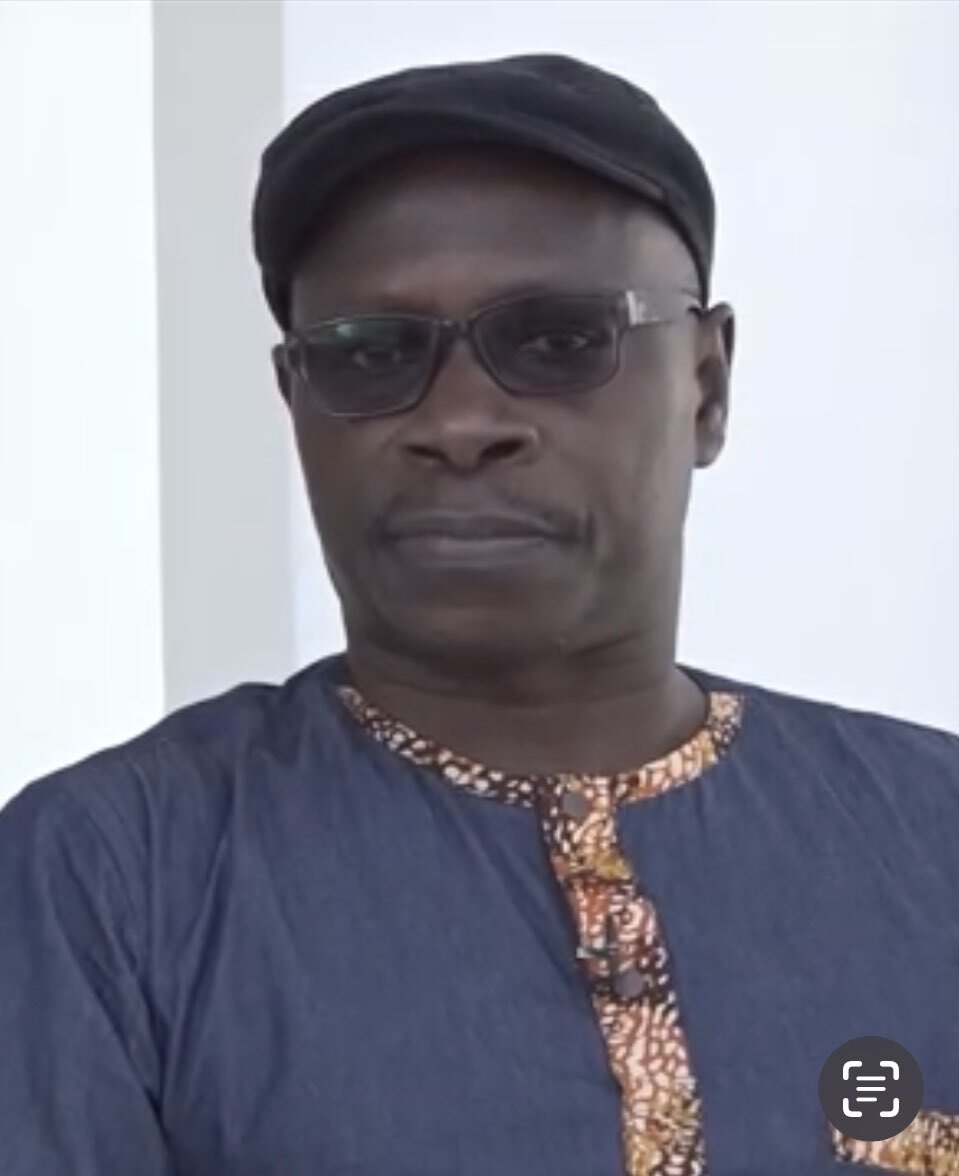
“We don’t know what is true, because everyone in the country has been silenced,” says Yacouba Ladji Bama, an investigative journalist now living in exile.
An interview.
Burkina Faso gained independence from its former coloniser, France, in 1960. After an initial period of turmoil and a series of coups, it became a beacon of hope for many Africans under its new leader, Thomas Sankara, who renamed the country from Upper Volta to Burkina Faso (“Land of the Upright People”). Sankara began implementing plans for economic independence and development but was tragically killed in 1987 in a coup d’état led by his former friend Blaise Compaoré, amid suspicions of French complicity.
From then on, the country was governed as a France-aligned dictatorship under Compaoré until he was overthrown in 2014 by a popular insurrection. A progressive movement for good governance, known as ‘Balai Citoyen’ (the broom of the citizens), nurtured many thinkers, artists and journalists, among them Yacouba Ladji Bama. The country also came to house the Cenozo investigative journalism centre and the Norbert Zongo journalism award.
The country’s efforts to forge a new path under a democratically elected government sadly came to nought after much of its territory was conquered by jihadi militias, which in turn led to a military takeover in 2022. A new junta under Captain Traoré is now fighting Islamist insurgents in an alliance with Russia, while clamping down on political and civil society activities.
Question: Over the past two years, the policies of Captain Ibrahim Traoré have been widely celebrated on social media as emancipatory steps by the Burkina Faso government, in particular his efforts to remove Western influence. What is your take?
I have started to distance myself from everything happening on social media regarding Burkina Faso, precisely because of this avalanche of propaganda. But what I do know is that a false image of Burkina Faso has been circulating for some time now. It is designed to prop up a system of governance that is completely anachronistic.
Question: Don’t measures such as the nationalisation of mines give the impression that Traoré intends to empower the Burkinabé people?
I don’t know of any specific examples of industries he has nationalised that have been successful. But I do know, from contacts in the country, that many mining concessions have been reallocated, not necessarily to Burkinabé people, but often to Russian companies or, in any case, other foreign companies. We don’t know the ins and outs of these various contracts with the new operators. Nothing has been made public regarding the management of the economy or the country’s finances. Everything is handled informally and shrouded in opacity.
There is no longer a free press in Burkina Faso that can investigate and tell us what is really going on. They have silenced all independent journalists in Burkina. Therefore, today, we have no choice but to settle for whatever information the government chooses to share with the world.
Question: In mid-July this year, Ibrahim Traoré’s government blocked or restricted foreign photographers’ permission to photograph people living in poverty, in its own words to ensure that people are portrayed with dignity. What are your thoughts on this development?
It’s manipulation. It’s a way to divert people’s attention from a reality that is truly indisputable in Burkina Faso, namely, that poverty continues to run rampant there. They don’t want the world to know what’s really happening in Burkina. They hope to prevent the whole world from seeing the reality. If you know that you are developing the country, that your policies will allow Burkina Faso to thrive, then why be afraid of showing the reality?
Question: Do you have any impressions of how the country has developed in recent years?
Unfortunately, I don’t have the impression at all that people are living better in Burkina Faso. The accounts of the few people who still have the courage to speak out are the complete opposite of what the government says. They say that everything is difficult. The cost of living has risen. People can no longer eat their fill, afford medical care or pay for their children’s education.
But only a few speak out on these issues. There is such a climate of fear that even when a Burkinabé feels bad, they have to publicly say they feel fine. If you dare to say that you’re suffering, you’ll sink even deeper into misery.
Question: So how do you get your information?
It’s only in certain circles that you find people who still have the courage to speak out anonymously. You use certain channels. You cannot use traditional channels. If you call someone in Burkina Faso today, say, on a direct phone line, to ask them about certain things, they’ll never speak to you because they’re afraid. They’re afraid that people will find out they spoke with you as a journalist.
Amid all the decolonial, anti-Western messaging coming from the government in Burkina Faso, there is an interesting thread of the country cosying up not only to Russia, but also to Donald Trump in the USA. At a recent pan-African “Family Values” conference, the third in a series started by the Trump-aligned Christian nationalist organisation Family Watch International, Burkina Faso was hailed as the next country in line to host the event. Burkina Faso also exited the International Criminal Court framework shortly after the United States announced that it would “dismantle” the Court. As Burkina Faso, together with its West African, and equally pro-Russia, allies Niger and Mali, announced their withdrawal from the ICC, the regional group denounced the Court as “a tool of neocolonial repression”.
Question: Is there anything else you’d like to share with an international audience—with people who aren’t in Burkina?
We need to bring the reality in Burkina Faso to light, and therefore we need to counter the government’s propaganda. We need to find ways to encourage Burkinabé people themselves to speak up and share their actual experiences.
Yacouba Ladji Bama is a Burkinabé investigative journalist. His work has been awarded with multiple prizes, including the Norbert Zongo Prize for Investigative Journalism. He was a member of the International Consortium of Investigative Journalists (ICIJ) in 2017 as part of the "Paradise Papers" project. He now publishes the online newsletter Bamyinga.com.
Call to Action
ZAM works towards a new equal relationship between Africa and Europe. Contribute to our mission by donating.