How a colonial relic in Belgium stands between Congolese geological data and a US Mining Firm
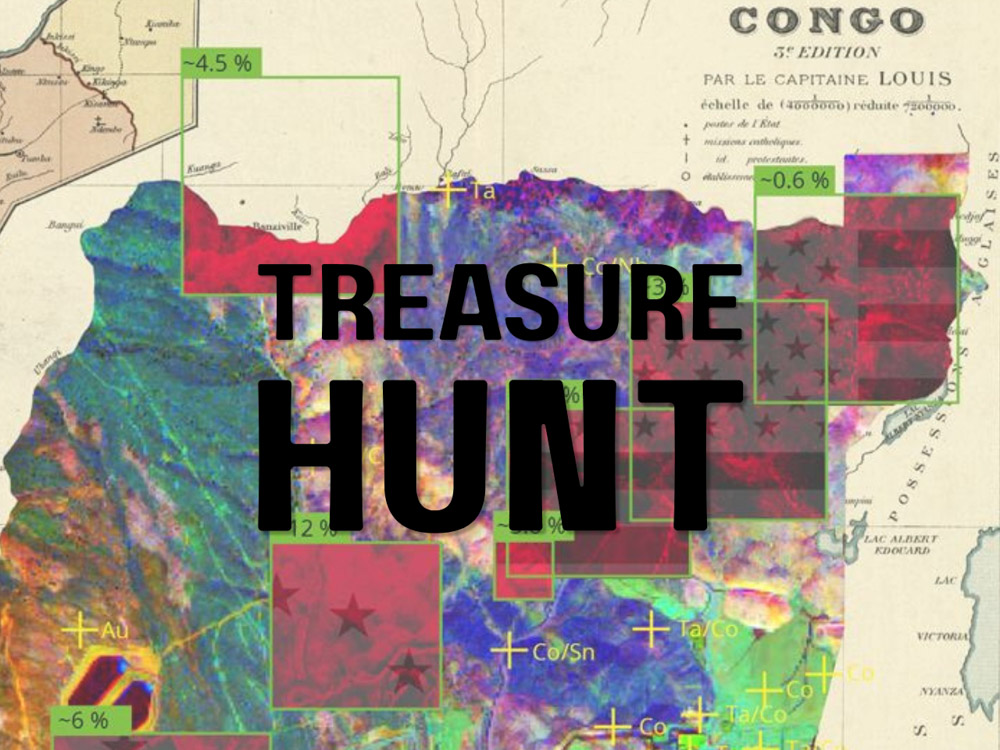
Sixty years after Congolese independence, immensely valuable data on the DRC’s mineral wealth remains in the possession of a Belgian museum rather than the Democratic Republic of Congo itself. Yet instead of reclaiming these “treasure maps”, the Congolese government now appears poised to hand them directly to the US mining firm KoBold Metals as part of a recent agreement with the administration of Donald Trump. Ironically, it is the Royal Museum for Central Africa in Tervuren, near Brussels, itself a relic of the colonial era, that now stands in the way.
The situation is a source of frustration for Jean Claude Mputu, deputy director of Resource Matters, an NGO dedicated to promoting sustainable development in resource-rich, low-income countries. To Mputu, it is “simply inconceivable” that “such data is still held abroad and is in no way the property of the Congolese state.” His indignation is palpable: the Royal Museum for Central Africa remains the sole repository of a vast colonial-era geological archive containing valuable information about his country’s subsoil. Yet Mputu is equally troubled by the fact that, once the collection is repatriated, the DRC government intends to pawn it out.
The museum’s millions of documents map the DRC’s mineral wealth
KoBold Metals, a company of strategic interest to the US government and backed by Breakthrough Energy Ventures — founded by Bill Gates and supported by a powerful group of billionaires including Jeff Bezos, Jack Ma and Michael Bloomberg — is seeking access to the geological archive to identify valuable mineral deposits in the DRC. The company positioned itself to become an early beneficiary of a carefully negotiated peace agreement between the governments of Rwanda and the DRC, brokered by the United States and Qatar. The agreement built on an earlier accord, offering US security guarantees aimed at ending the conflict between Congolese forces and the Rwanda-backed M23 in exchange for regional economic cooperation focused on securing US access to critical minerals.
The conflict in eastern DRC has claimed millions of lives since the late 1990s. It escalated again in January 2025, when M23 seized large areas of the eastern provinces, took control of major mineral deposits, displaced hundreds of thousands of people — many of whom had already been uprooted multiple times — and killed thousands more.
Momentum
The peace part of the deal has so far been less than successful; fighting between Congolese forces and M23 continues. However, the economic component, which encouraged American companies to invest in mineral supply chains, processing facilities, and related infrastructure across the region, has seen more momentum.
In July 2025, the Congolese government and KoBold Metals agreed to explore critical mineral resources nationwide. Alongside the agreement, the two parties proposed digitising and making publicly accessible geoscientific archives jointly held by the Congolese Mining Cadastre, the National Geological Service of Congo (SGNC), and, crucially, the Royal Museum for Central Africa (RMCA) in Tervuren, Belgium.
While “digitisation” and “public accessibility” sound innocent enough, the company has a clear interest in being the first to analyse the data, and there are existing concerns around privileged early access. During KoBold’s digitisation of the Zambian Geological Survey in 2025, the World Bank warned that the company “will likely have exclusive access to the data for some time” and would be the first to interpret it before the handover.
The US-Congo peace deal is also about access to critical minerals
But the museum, despite its colonial legacy, which includes a long history of servicing private mining firms (see below), put a spoke in the wheels of the deal. It argued that it had not been party to the agreement requiring the SGNC to facilitate KoBold’s access to the museum’s archives. Citing its role as a research institution, the museum maintained that it could not enter into an agreement with a private company that had a direct commercial interest in such access.
Africa’s crucial minerals
KoBold’s interest comes amid renewed global competition for African mineral resources, driven in part by surging demand for green technologies, artificial intelligence, and military innovation. Minerals such as lithium – once used primarily in ceramics and medicine – are now essential to modern battery production. According to the European Commission, demand for lithium is projected to increase nearly fourteenfold by 2040. Gold has followed a similar trajectory: its inflation-adjusted price has risen by more than one thousand per cent since Congolese independence. Even mines deemed depleted during the colonial era can now generate substantial returns. Advances in exploration and extraction technologies have also made previously inaccessible deposits economically viable.
Mining historian Duncan Money explains that rising demand for metals such as copper, cobalt and lithium has given colonial-era geo-archives new commercial value, not only for their geological data but also for the information they contain about previous mining efforts. “The new metals boom is taking place in a region with a long and continuous history of large-scale mining operations,” he says.
German geologist and long-time DRC mining investor Klaus Eckhof, who previously stated that RMCA archives were accessed by his team to identify one of the world’s most profitable gold deposits, has expressed similarly high expectations for what may still lie underground in such regions. Speaking on a dedicated investor YouTube channel, he explained that colonial operators focused only on high-grade mineral deposits and ignored much else. He told viewers that “the Belgians only mined deposits with a minimum of 15–16 grams [of gold] per tonne… You can imagine what kind of deposits remain.”
At odds
Following the museum’s rejection of the SGNC and KoBold deal, its Earth Science department launched its own in-house digitisation of its geological archives. This took place within the framework of a European Union–funded programme, PanAfGeo+, which aims to strengthen geoscientific capacity and promote sustainable resource governance across Africa. The institution housing knowledge extracted by companies from former colonial powers is thus now positioned as an obstacle to a new wave of American commercial ambition seeking to profit from the same resources.
The museum’s clients have historically included many mining firms
The Royal Museum’s reluctance to work with KoBold is notable given its long history of cooperation with the Western mining sector, which has helped shape its geological collections. The museum’s 2006 annual report, which explains that its geo-archives documentation has “become highly valuable since the resumption of activities in the Congo by mining companies”, offers a partial account of its more than century-long involvement with the sector, starting from the late 1930s through to the 1960s. In that period, the RMCA maintained close ties with the mining and oil industries, and senior staff acted as links with the Belgian government and the private sector. An article on the Belgian Science Connection website that outlines the institution’s historical connections to the mining sector notes that “the museum was pivotal to the collaboration between researchers and industry in Belgium and the Congo”.
The same article explains that, before Congolese independence, RMCA staff held — or subsequently went on to hold — key roles in major organisations such as the Syndicate for the Study of the Cuvette Centrale, a consortium of oil companies exploring the hydrocarbon potential of the DRC’s central region, and Recherches Minières du Bas et Moyen-Congo (BAMOCO), formed by mining companies focused on the mineral potential of the Lower Congo.
Conflict
But collaboration with mining companies did not cease after the DRC’s independence in 1960. As late as 1998, the RMCA worked with GF Consult, a company providing geological services to the mineral exploration industry, on a programme benefiting Canadian Anvil Mining in the country. This partnership continued even as conflict raged in the DRC. In 2004, Anvil was implicated in a massacre near its concession area in which, according to human rights groups, the Congolese army abused and executed over a hundred civilians. Testimonies cited by MONUC (the now-defunct UN peacekeeping mission) indicated that Anvil Mining provided vehicles, aircraft, and logistical support used in the operation. The company denied wrongdoing, stating that its assistance had been requisitioned by DRC authorities.
The massacre occurred amid growing concerns about corporate involvement in conflict-affected regions. According to its 2005–2006 annual report, the RMCA also faced scrutiny over its role in Congo’s mining sector and subsequently established a new department, GEODOC, to regulate interactions with companies as well as with national and international institutions. However, private-sector collaboration nevertheless remained significant. The same annual report highlights that, in that year, the museum hosted around 300 industrial visitors. The year before, in 2004, the museum and GF Consult together published a CD-ROM titled Inventory of the Mineral Occurrences in the Democratic Republic of Congo, which was based largely on Belgian colonial archives and sold for €1,073.50 plus postage. Containing over 800 mineral occurrences and more than 1,100 commodities, the CD-ROM remains on offer on GF Consult’s website. The company continues to provide consultancy services to exploration firms seeking to use colonial-era records held by the RMCA and across Belgium.
According to company and museum literature, the RMCA’s clients have, over the years, included major mining houses such as BHP Billiton, De Beers, and Areva, as well as mid-sized firms including Kilo Goldmines, Loncor Gold, Southern Era, Central Copper, and Pangea Diamondfields.
Opération Archives
The RMCA, established in 1898, is one of the world’s most significant repositories of Congolese records and artefacts. While its cultural collections have been central to debates on art restitution, its geological holdings have received far less scrutiny. The museum’s Earth Sciences Department oversees 23 collections, and its archives comprise more than 264,000 aerial photographs, over 25,000 maps, approximately 160,000 rock samples, 19,000 mineral specimens, and roughly one kilometre of geological archives and scientific records spanning the post-colonial period. Together, these materials amount to millions of documents, including records that detail the composition and resource potential of the Democratic Republic of Congo’s subsoil.
Some of the documents in the geo-archive originate from the era of the Congo Free State (1885–1908), when the territory was under the personal control of Belgium’s King Leopold II, who granted extensive concessions to private companies at devastating cost to the Congolese population. Many records were deliberately destroyed before Belgium assumed formal control in 1908, amid fears of reprisal. Mining historian Duncan Money notes that relatively few documents from this period survived, explaining that “after the transfer of power, surviving materials were shipped to Brussels, where they were either preserved or discarded.” On the eve of Congolese independence in 1960, Belgium again transferred most of the remaining archives out of Congo to Brussels, fearing they could be used against the state. Money adds: “What Belgium termed Opération Archives involved moving enough documents to occupy nine kilometres of shelving in Brussels.”
Today, artefacts and documents from Congo’s colonial past are dispersed across private collections, museums, and government repositories, many of them located outside the country. The fragmented record spans archives in Kinshasa, Lubumbashi, and Likasi, as well as in Manchester, Brussels, and Tervuren, home to the RMCA.
In response to questions, the Royal Museum for Central Africa told us that it had closed access to the archives to companies several years ago. However, the museum’s website still stated that “companies interested in the mining sector in Congo can visit the department and consult the archives.” A personal visit to the archive, including access to geo-archival documents, costs approximately €300 per person per day, while assistance with preparation and consultation is priced at €250. The day after we requested a comment on this matter, the service was removed from the website.
François Kervyn, head of the RMCA’s Earth Sciences Department (and also of its Natural Hazards & Cartography Unit), said that although the service remains publicly accessible online, the museum discontinued the practice several years ago due to its “limited capacity to respond to requests” and the Democratic Republic of Congo’s establishment of its own Geological Survey, to which such requests are now redirected. He added that the museum distinguishes between private-sector and university researchers, with the latter being accommodated where possible. “The issue of access for commercial purposes will preferably be resolved through a system of public access to all documents, thereby creating a level playing field,” Kervyn said.
Kervyn notes that the PanAfGeo+ geological archives project is still in its setup phase. How access will be organised and whether any fees will be charged remain under discussion. “The RMCA must comply with Belgian and European regulations requiring open access,” Kervyn said. “There are exceptions, for example, when a deposit or donation contract binds the RMCA to the depositor, but no such case has yet been identified.” Kervyn defends the museum’s position, explaining that as a public service, the RMCA cannot enter into agreements such as those desired by DRC authorities and KoBold with a private company that has a direct commercial interest in the material. He emphasises that large-scale data sharing “must follow formal procedures, including at government level.” Furthermore, he notes that the museum was already engaged in digitisation activities before KoBold approached it.
“Part of the data was gathered using colonial labour”
Gillian Mathys, a social historian of the African Great Lakes region at Ghent University, said the pricing structures raise concerns about access. “Part of the data was gathered during the colonial period using colonial labour. It is problematic that you need to pay for access. The costs are very high for scholars – especially Congolese scholars – which means access is (still) largely reserved for the private sector.”
Europe
Is the right way forward, then, to proceed with the museum’s own efforts within the EU’s PanAfGeo+ project? In his PhD research, Steffen van der Velde, a coordinating policy officer at the European Union, explains that although PanAfGeo+ has the potential to significantly improve geological knowledge and mineral mapping across Africa, its outcomes may still ultimately serve “European industrial priorities.” He warns that the benefits for African states will “depend on how EU institutions direct the programme,” adding that “(these institutions) can steer the focus of the programme towards those raw materials which are deemed critical to the EU in terms of supply risk and economic importance.”
“Where do the interests of the Congolese people lie and where are our leaders?”
Resource Matters deputy director Jean Claude Mputu remains frustrated that the Congolese government chose, in the first instance, to outsource the digitisation of minerals data to a foreign company. However, while he agrees with the museum’s decision to block KoBold’s request, he also questions why the data remain outside Congo’s control today. “Woe betide the (minerals) producing countries,” he summarises, adding that he wonders “whether the Congolese government does not have the means” to digitise these documents itself. “The rationale for this decision completely escapes me at a time when we are continually told about economic sovereignty and responsibility. Successive Congolese governments have apparently not applied the necessary pressure to recover what is rightfully theirs. KoBold and the museum defend their own interests while the Congolese people, unfortunately, are left with nothing but their tears. The central question is: where does the interest of the Congolese people lie, and where are our leaders?”
KoBold Metals and the Government of the Democratic Republic of the Congo did not respond to requests for comment.
This is an edited version of an article previously published in Dutch.
This story was done with the support of journalismfund.eu.
Call to Action
ZAM works towards a new equal relationship between Africa and Europe. Contribute to our mission by donating.