Kenya’s electoral theatre runs on Western software
As Kenyan voters, we have become used to experiencing, every five years, a high-stakes drama full of sound and fury, in which the stage is set years in advance, the actors are meticulously costumed, and the script is written in a language only the elite truly speak. EU funds provide the software for the show.
At the reception area of Anniversary Towers, the headquarters of the Independent Electoral and Boundaries Commission (IEBC), the body tasked with organising elections in Kenya, I deliver a letter centred on a simple question: why, in the IEBC’s view, has increased investment not translated into electoral trust?
The script is written in a language only the elite truly speak
That electoral confidence has been declining rapidly cannot be contested. A 2024 survey revealed that 60% of Kenyans believe the IEBC lacks transparency, and as of March 2026, only 216,000 new voters had registered against a target of 6.3 million. That the IEBC’s sky-high budget, now the equivalent of € 420 million, and to be spent on next year’s elections, has done nothing to mitigate this apathy is also a fact. I want to know what the IEBC’s response to this reality is.
A revolving door
Kenya’s government is a revolving door, consistently returning one of two dominant parties, both representative of the political and business elite, to power. They face off at the ballot; one is declared the winner, while the other disputes the result, often citing irregularities.
In the high-stakes battle that decides who will benefit from access to power and state coffers, violence and other forms of trauma have often occurred. For instance, the 2007–2008 Kenyan post-election violence, the annulment of the 2017 Kenyan presidential election, and the contested outcome of the 2022 Kenyan general election. Each cycle has reinforced a sense of déjà vu rather than progress. The Office of the Auditor-General of Kenya has repeatedly flagged gaps in the use of election funds, raising questions about accountability. For many Kenyans, the issue is no longer just who wins, but why the same problems persist, election after election.
Opaque expenses
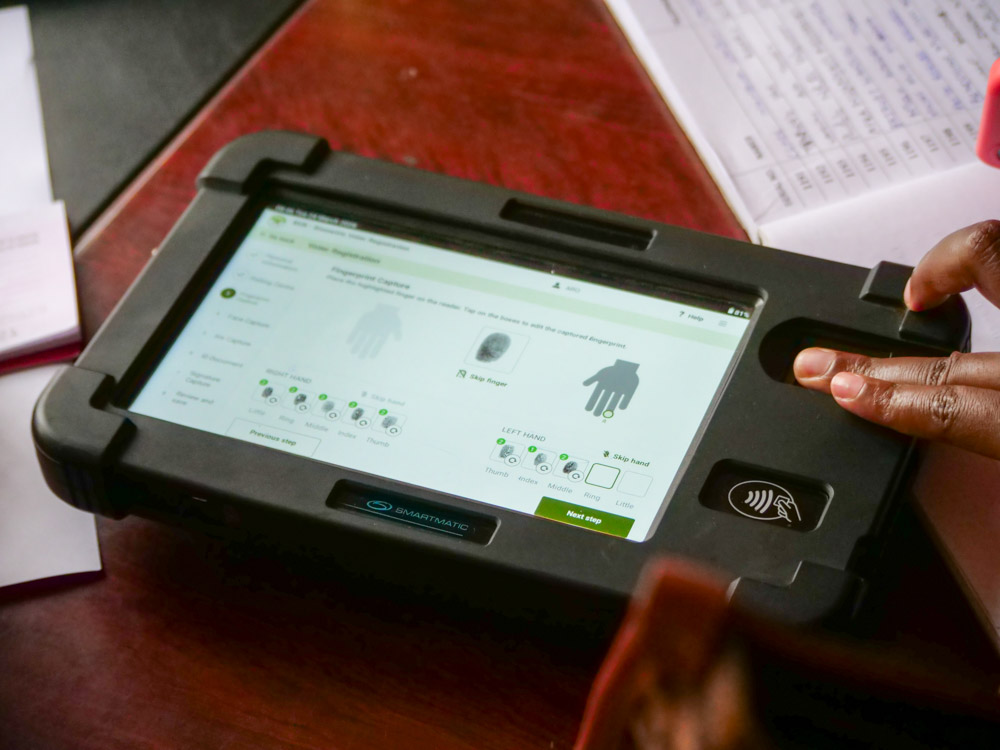
Documents presented to Parliament by the IEBC in January 2026 include requests for the equivalent of €255 million for election management, €44 million for voter education, €81 million for ICT, and €2.5 million for boundary delimitation. Given that past elections have been marred by nullified contracts, reports of tender scams, and allegations of pre-arranged outcomes, it is reasonable to ask where this funding will be allocated this time. Why does the Commission need to procure new, costly digital voter ID kits rather than reuse those deployed in the 2017 and 2022 elections, particularly from a company such as Smartmatic, which has been the subject of scrutiny regarding opacity and unidentified local partners?
I ask all this because election time in Kenya is also the time for the politically connected to secure large chunks of taxpayers’ money, supplying ever-new machinery for our voting processes. Declaring previous equipment obsolete becomes a justification for new contracts in 2027. The memory of the French Morpho tablets, bought in 2017 at a cost of €37 million from a French-Dutch company, is fresh in my mind. These devices could not be properly operated by Kenyans, as the company retained control over the data. This debacle ultimately led to the procurement of yet newer machines in 2022. Opposition candidate Martha Karua, a former minister who has become increasingly vocal against state oppression and corruption in Kenya and the wider East African region, has already called for an audit of the IEBC, stating that: “This is budgeted corruption. Kenyan elections are more expensive than any other elections in the world.”
“This is budgeted corruption”
The reply to my letter from acting IEBC Secretary Moses Sunkuli states that the Electoral Commission is an “institution bound by law”, “transparent by design”, and “unfairly maligned by allegations”. Sunkuli denies all reports of tender manipulation and emphasises that the new digital voter kit supplier, Smartmatic, submitted a bid of over €21 million, which was the lowest compared to its competitors. On the question of why Kenya needed to purchase new kits in the first place, Sunkuli states that the old ones were “obsolete”, but offers no further details. The contract between Smartmatic and the IEBC is not publicly available, and there is limited information on the Public Procurement Information Portal regarding this tender, Smartmatic’s directors, or its beneficial ownership.
I do not receive a response to my request for a breakdown of the total cost of the Smartmatic contract, nor to my question regarding what percentage of the IEBC budget is covered by Kenya itself and what proportion by election donors. Sunkuli states only that donor funds support “incidental” areas.
Software
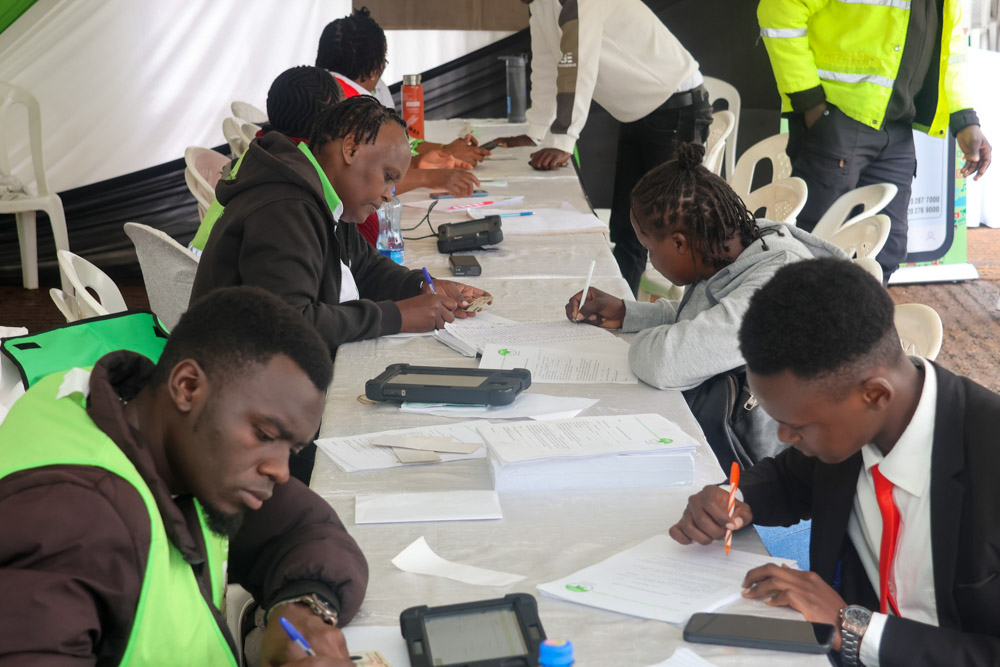
Trying to find out what the EU funds are in which “incidental” areas is an almost impossible exercise. From the projects it publishes, it appears to generally stay far away from the technological hardware used in our elections, in all likelihood precisely because material procurement is so vulnerable to corruption. It is, after all, in the juicy million-dollar contracts that a chain of connected intermediaries takes its share. Endeavouring to keep its hands clean, the EU appears more comfortable providing the software: the trainings, the conferences, the surveys, the reports, the observer missions, all interspersed with an endless cycle of workshops.
The EU keeps its hands clean
So far, with the 2027 elections still 16 months away, the familiar signs of campaign mode are already showing in Nairobi: from billboards featuring “aspirants” to the occasional speech by a candidate at a funeral that somehow makes it into the nightly news bulletin because the speaker has said something they knew would grab headlines and earn them free visibility. Press announcements on training opportunities and surveys have already landed on my desk.
I am navigating a complex maze of intermediary recipient structures and published donor reports, many of which do not provide itemised budget expenditure for their specific projects. After long and arduous research, I find that we are probably talking about around €18.5 million from 2017 onwards. A key project from that time, called Strengthening Electoral Processes in Kenya (see below) brought in €5 million. According to EU accounts received by ZAM, it thereafter channelled over €10 million into our elections machinery between 2019 and 2024 (including €4.7 million for a 2022 elections project called Consolidating Democratic Dividends for Sustainable Transformation in Kenya). There has also been an EU-funded "Pro-Peace" project aiming to mitigate conflict during the 2022 elections at a cost of €3.5 million, which was not captured in the EU accounts sheet. And there has probably also been some additional funding from other projects, but I cannot trace the EU share in those. So let’s say €18.5 million.
Coins in a basket
The search is all the more difficult because this funding does not go into Kenyan government accounts. The main intermediary, the United Nations Development Programme (UNDP), is not even Kenyan. In the world of international aid, this is called a basket fund. In it, multiple donors—the EU, the UK, the USA— all toss their coins. The UNDP then stirs the pot and doles out the funds. UNDP’s “multi-donor” reporting structure then records expenditure under ambiguous categories such as “Outcome 1: Institutional Strengthening”, which may refer to anything from conferences attended by state institutions to capacity-building workshops for electoral staff.
The receipts are kept in Gigiri
While leaving journalists in agony, this “basket” approach also enables donors to shield themselves from accountability. Kenyan voters still remember “Chickengate”, a 2010 case in which the elections commission CEO used British funds to award lucrative printing contracts to pals under the code name “chicken”, thereby severely embarrassing the UK. Basket funds are intended to prevent further “Chickengates”, as funds can no longer be traced to individual donors.
Printing remains an outcome, though. Monitoring, surveying and consultancy firms still produce dozens of glossy forecasts before elections, and evaluations afterwards.
The basket funding also protects Kenyan authorities. While the IEBC is, at least in theory, subject to the scrutiny of the Auditor-General and Parliament, UNDP’s internal books are a fortress, audited only by the UN Board of Auditors. Detailed line-item expenditures—who received consultancy contracts, how much was spent on luxury hotel workshops in Naivasha, and what exactly was achieved through a “strategic planning retreat”—are hidden behind a veil of international diplomacy. Pressed on itemised expenditure within UNDP programmes, a senior IEBC staffer tells me, on condition of anonymity, that the “receipts are kept at the UNDP office” in Nairobi’s Gigiri suburb. He adds that even the IEBC itself receives only project outcomes, not details. Kenya's Auditor-General's office did not list the UNDP funds in its most recent audit of the electoral commission.
Awareness drives
My quest to track EU funding, and what it has contributed, or not, to Kenya’s democratic processes begins in early 2017. The memories of the 2013 election, which saw a petition challenging its validity, are still fresh, and the international community is anxious. The EU has contributed €5 million to a UNDP project titled “Strengthening the Electoral Processes in Kenya” (SEPK): (1), alongside similarly sized contributions from the USA and the UK. The goal includes legal reforms and civic education.
The project hires trainers, runs awareness drives, and upgrades the registration IT. It is building the “software of democracy,” the headlines read. But on election day, 8 August 2017, that software meets the hardware of Kenyan reality.
The cancelled elections are a “success for the rule of law”
The millions spent on strengthening the process have not protected these elections from turning out even worse than in 2013; this time, they are cancelled for real. The 2017 election becomes the first in African history to be nullified by a Supreme Court, with judges citing “irregularities and illegalities” and slamming both a manipulated vote transmission system that was a “black box,” and a commission that failed to follow the very laws the EU-funded consultants helped draft.
In the aftermath, foreign observers from donor countries call the cancellation a victory for the rule of law. They point to the “technical assistance” they have provided to the justice system through initiatives such as the Programme for Legal Empowerment and Aid Delivery (PLEAD), which had included training for judges. The judges had made the historic ruling to “refer these elections to the rubbish bin”, so that was good, they said.
The Kenyan taxpayers foot the bill for a repeat election.
Doubtful outcomes
Five years later, in the run-up to Kenya’s next elections in 2022, the EU continues its basket fund support approach, this time funding the UNDP for two projects. One, costing €4.7 million (US$5.5 million), is the above-mentioned Consolidating Democratic Dividends for Sustainable Transformation in Kenya. It is described as developing “policy research and aide-mémoires to inform the national recovery and prosperity agenda, contributing to strengthened institutional capacity and compliance as well as increased gender inclusion, transparency, and accountability.” It also “aims to increase the knowledge of governance processes among citizens, fostering civic and media engagement for accountable service delivery.” Another €3.5 million is spent on a “Pro-Peace Kenya” project, also mentioned above, which involves a familiar pattern of consultancy company contracts for “conflict mapping”, media campaigns, and the setting up of “early warning systems” in case of violence.
Kenyan authorities failed to prosecute any government official
Whether the outcomes, if any, of legal empowerment, access to justice, and peace will be sustainable is, overall, doubtful. Human Rights Watch will later report that “Kenyan authorities failed to investigate or prosecute any police officer or government official over the killing of at least 31 people during the 2023 cost-of-living protests”, a pattern repeated in 2024 when around 60 pro-democracy protesters were shot in the streets by security forces.
Low turn-out
In 2022, the projects do seem to work for a while. There is little violence. Voter registration climbs to 22.12 million, and more women win elective seats than ever before. But the turnout figures then tell a different story. While in 2017, 78% of registered Kenyans showed up to vote, in 2022, even after years of civic education and voter awareness, turnout drops to 64.77%. In some areas, particularly among young people, apathy regarding elections is reportedly massive, while street protests are on the increase.
The electoral commission blames misinformation and COVID
In its Post-Election Evaluation Report for the August 2022 election, the IEBC blames “misinformation” and COVID-19 for the low turnout. It forgets to mention that various pre-election reports have found that Kenyans had even less confidence in the IEBC in 2022 than they did in 2017.
During the five months this investigation took, receiving tangible input from those in charge of Kenya's electoral assistance projects has remained difficult. An email and phone calls to the European Union Delegation in Nairobi finally result in a representative requesting an in-person interview. Sadly, due to busy schedules on both sides, this interview cannot be arranged in time for our deadline, but the delegation maintains that it will not comment in any other way.
The UNDP office in Nairobi has no contact for journalists. In an emailed response from its USA-based headquarters, a spokesperson only states that its electoral support in Kenya "prioritises the inclusive participation of women, youth and persons with disabilities in the electoral process, alongside civic stakeholder and voter engagement; voter information and education; capacity building support to electoral authorities; and strengthening media capacity." The email does not engage with asked questions regarding expenditure opacity or Kenyan state violence.
Campaign finance
In its report on the 2022 elections in Kenya, the EU Observer Mission called into question the “institutional independence” of the IEBC, saying that its administration of the elections was challenged by, inter alia, a “dearth of proper communication that undermined transparency, as well as political divisions that became fully apparent as the process developed.” It also said that “the elections were marred by the lack of a proper campaign finance framework” and that “numerous allegations of corrupt resources being used by political contestants and of voters being paid for their consideration were rife.”
In apparent agreement with this last point, IEBC Chair Erastus Edung Ethekon has recently called on Parliament to comprehensively reform the Election Campaign Financing Law, warning that the current legal vacuum has exposed elections to “unchecked spending” and “illicit funds”. He also argued that greater transparency in election financing would help curb “foreign interference”.
Generation Z is calling its peers to the vote
Agents of change
Surprisingly, youth voter registration has recently surged, driven largely by unfunded youth movements such as Niko Kadi, which is mobilising peers and the wider public into political engagement. The phrase Niko Kadi, meaning “I have the card”, is now sweeping across the country as Gen Z voters document their journey towards the 2027 general election on TikTok, X, Instagram, in matatus, on university campuses, and even in casual conversations among friends.
The movement may not yet receive much gratification from the upcoming polls; our two-party elite system is still firmly established. But many Kenyans are already welcoming it as a possible agent of change.
(1) This article from the EU’s diplomatic service, the EEAS, is dated 17 January 2017 but reports on support for elections that took place in October 2017.
See all the instalments in this Transnational Investigation here
Elections circus
Ivory Coast | A mirage of democracy
Nigeria | Technology 0, politicians 1
Zambia | Restraint and fear
Uganda | A humanitarian veneer
Jimmy Kitiro | When aid helps autocracy
Call to Action
ZAM works towards a new equal relationship between Africa and Europe. Contribute to our mission by donating.