Not supporting troublemakers
The European Union does not provide electoral support to the Ugandan state because of human rights abuses by its government, led by 81-year-old autocrat Yoweri Museveni. But it is also not supporting grassroots activists in their fight for democracy in the country. “We were told we should not support troublemakers.”
Ever since Uganda’s 2016 general election, already marred by fraud and violence, the European Union (EU) has significantly reduced its direct involvement in funding or observing elections in the country. Even specific funding for election-related programmes was phased out following the violent 2021 election, when scores of people were shot in the streets by security forces.
Recent elections were marked by mass arrests, killings and kidnappings
According to an account received from the EU, the only funding formally allocated to support democracy in Uganda in the run-up to the 2026 elections was €2 million in 2024, given to the Netherlands Institute for Multi-Party Democracy for “training, dialogue, and capacity building for political actors and youth”, through projects such as its “Democracy Academy”.
Recent elections in January 2026 were once again marked by mass arrests, killings, and kidnappings.
The fund “undermined government authority”
The EU has not supported the human rights activists currently still searching prisons for confirmation of detentions, deaths, or torture. Civil society funding has dried up since 2021, when President Museveni closed a multi-donor fund called the Democratic Governance Facility, which had previously assisted pro-democracy activists and independent investigative journalism. The President closed the fund because, he said, it “undermined” government authority.
Under increasing fire
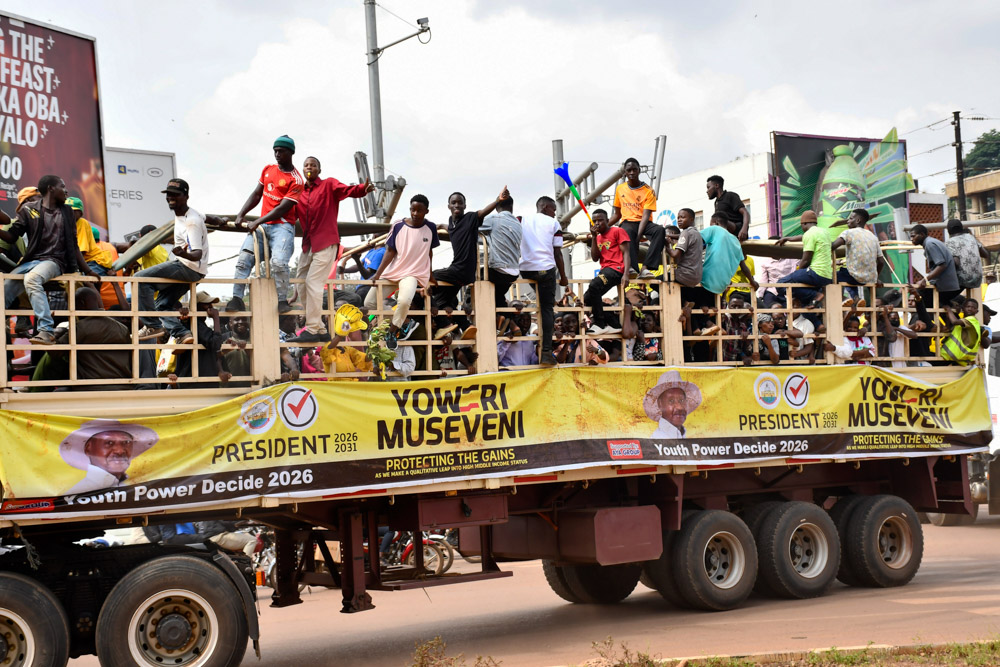
Ever since, civil society and the opposition have come under increasing pressure in the country. On 15 January 2026, election day, this culminated in the killing of at least 15 opposition supporters, eight of whom were reportedly killed by security police when they found them hiding in their MP’s house. MP Muwanga Kivumbi, the opposition National Unity Platform (NUP) deputy president for the Buganda region, was arrested and charged with terrorism, joining a list of hundreds currently incarcerated.
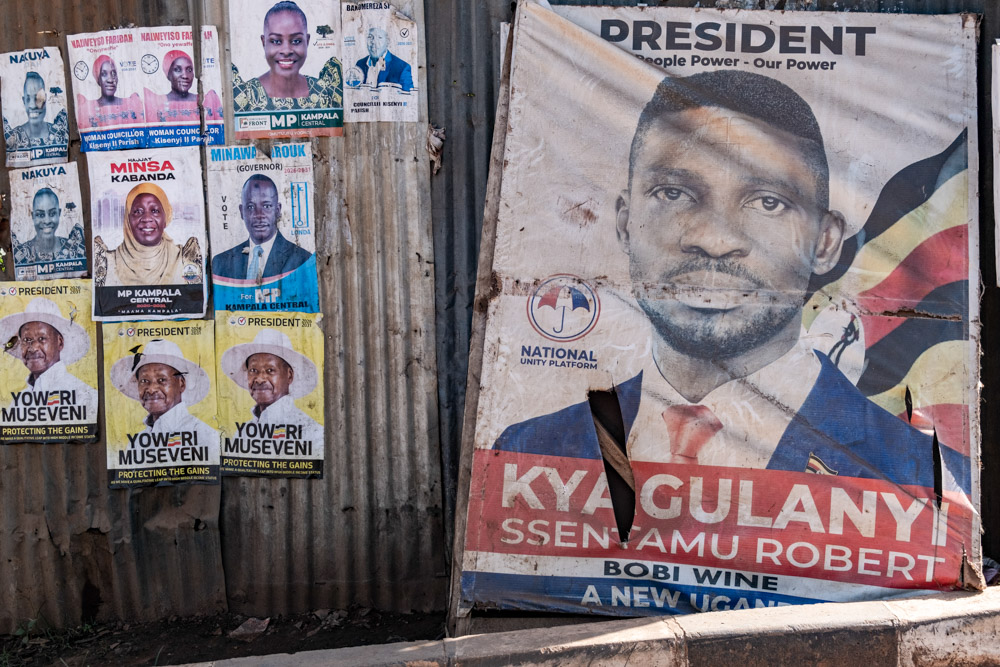
National leader of the NUP, Bobi Wine, and his family faced persecution in the aftermath of the January polls and fled into exile. Opposition doyen Kizza Besigye, who was abducted in Nairobi, Kenya, in December 2024 and renditioned to Uganda, remains detained in Luzira, Uganda’s largest prison on the outskirts of Kampala.
“I don’t think I slept more than three hours per night”
The human rights and accountability platform, the Agora Centre for Research, has documented hundreds of arrests during and after the January elections. Despite a nationwide internet shutdown, the team, in coordination with 30 journalists across the country, continued to receive constant reports of extrajudicial killings, enforced disappearances, arrests, and state brutality.
“I don’t think I slept for more than three hours a night between 13 January and early February,” says Agather Atuhaire, Agora’s team leader. “During the period the internet was cut off (by the government), I was continuously on the phone with our colleagues across the country. When the internet was restored, photos and videos to support the information came through. Months later, we are still receiving information about victims we had not known about.”
A strong statement
On 12 February 2026, in a strong statement, the EU Parliament condemned “the conduct of the Ugandan elections on 15 January 2026, which were marred by abuses, widespread intimidation, fraud, violence, and a nationwide internet blackout”, and called for “independent and impartial investigations into crimes against humanity committed by political and military leaders.”
The seriousness of this declaration might, however, be questioned in light of another EU event which, amid far less publicity, was held in Uganda itself only one week later. On 19 February, during the anniversary marking 50 years of donor ties to Uganda, held at the residence of the Swedish head of the EU delegation to Uganda, Jan Sadek, the latter told gathered dignitaries that they were there to “celebrate a partnership that has lasted, adapted and delivered.”
The EU delegation head praised Uganda’s avocado and pineapple
In his speech, Sadek focused more on improving trade ties with the EU and praising Uganda’s tasty avocados and pineapples, announcing a cooling storage facility at the airport to accommodate perishable fruits and vegetables, than on recent events. Throughout his speech, he made no mention of the victims of enforced disappearances or extrajudicial killings.
Apparently still smarting from the EU statement, the Ugandan government sent only John Leonard Mugerwa, head of international legal and social affairs at the Ministry of Foreign Affairs, instead of a minister.
No ruffling feathers
The event, the speech, and the Ugandan snub fit a pattern in which expressed criticism by the EU appears to be immediately punished by a clear frost — and subsequent European backpedalling. EU sources who spoke to ZAM on condition of anonymity confirm that the Union has gradually become reluctant to ruffle the feathers of the Ugandan government. “We were told not to support troublemakers,” said one.
They would be in trouble if the General found out
An example of this was the cancellation of an EU member state–sponsored annual human rights conference slated to take place in December 2025, a month before the elections. The prestigious event, which has honoured activists like Jimmy Spire Ssentongo and Praise Aloikin Apoloje, was cancelled because “EU member states were not comfortable with an event on human rights at such a time”, in the words of another anonymous diplomat.
He added that “there was a view that they would be in trouble if (the Commander of the Defence Force, and also the president’s son), General Muhoozi Kainerugaba, found out about it. They said it was ‘best to reinstate funding after the elections because the election period was very sensitive.’” Interviewed activists, however, said they felt there is little hope of reinstatement, since the belligerent Kainerugaba “seems to be more than ever in charge” in Uganda.
Persona non grata
The regime’s volleys against EU “meddling” had already started in July 2020, when Marco de Swart, an elections officer at the Europe-financed Democratic Governance Fund (DGF) that supported civil society in Uganda, was blocked from returning to the country after travelling and was declared persona non grata. Five months later, in December 2020, EU elections adviser Simon Osborn was briefly detained and deported.
After the 2021 elections, which saw scores of protesters shot in the streets, one of the first acts of the once-again elected president Museveni, upon returning to office in February 2021, was to launch an attack on the DGF fund. Alleging that the facility was financing “subversive activities” in Uganda, the president ordered the suspension of all DGF activities. Although it briefly became operational again after a presidential meeting with the Danish Minister for Development Cooperation on 22 June 2022, it shut down fully a year later. It marked the death knell for many civil society initiatives in the country.
The government talks about “fighting the imperialists and colonialists”
The EU appeared increasingly browbeaten under Uganda’s onslaught, often expressed in terms of “fighting the imperialists and colonialists”. When, in 2024, Ugandan activists exposed the theft of millions of US dollars in taxpayer funds through a parliamentary swindle headed by the Speaker of Parliament and fervent Museveni loyalist Anita Among — who was also accused of personally pinching iron sheets intended for roofing in poor communities in Uganda — the UK and US imposed personal sanctions. Among and two other Ugandan ministers implicated in the iron sheets theft were subjected to asset freezes and travel bans by these two countries. The EU, however, said nothing.
A brief stir
In May 2025, there was a brief stir when German ambassador Matthias Schauer publicly expressed concern about army commander and Museveni junior, General Muhoozi Kainerugaba’s threats on X to “behead” opposition leader Bobi Wine, as well as his boasting on the same platform about the kidnapping and torture of one of Bobi Wine’s bodyguards. But Schauer was immediately put back in his place by Kainerugaba, who announced the suspension of all military cooperation with Germany, while accusing Schauer of being involved in “subversive activities” and of being “wholly unqualified” to be in the East African state.
The German development head was accused of espionage
The Ugandan authorities now kept hammering at Germany. In October 2025, another German, head of that country’s development cooperation programmes in Uganda, Tasillo von Droste, was accused by Ugandan “security sources” of being an “intelligence operative” assigned to run a “covert espionage mission in the country.”
According to state sources, this accusation followed the creation of dossiers by the country’s intelligence services, alleging that Germany’s Deutsche Gesellschaft für Internationale Zusammenarbeit (GIZ), under Von Droste, was plotting “regime change” under the “pretext of offering financial support to civil society.” The fact that GIZ was also funding several state agencies for development projects did little to assuage the government’s anger: all government agencies were ordered to halt receiving funding from GIZ.
In the aftermath of the affair, several of the few remaining civil society projects in Uganda had to close down because of alleged links to Von Droste.
The same state sources quoted above said that Von Droste was deported from Uganda after the accusations, alongside the programme director of Germany’s education projects arm, DW Akademie, Miriam Ohlsen. The sources added that this was kept quiet because the affected organisations, the German embassy, and EU member states in general did not want to further anger Uganda’s army commander after the Schauer debacle.
Patching up
On 7 January 2026, Uganda announced that the two countries had patched up their differences and that military and other cooperation had resumed. State broadcaster UBC reported that: “General Muhoozi Kainerugaba today met Germany’s Ambassador to Uganda, H.E. Matthias Schauer, reaffirming the long-standing bilateral relations between Uganda and Germany. Ambassador Schauer praised Uganda’s role in regional affairs and reaffirmed Germany’s commitment to continued collaboration, with both sides agreeing to address any differences through diplomatic dialogue.”
Different forms of engagement
When asked about its silence on human rights issues, particularly in the aftermath of the EU’s condemnation of Uganda’s political and military leaders in Brussels, the EU office in Uganda responded: “The European Union’s different institutions have different roles, mandates, and ways of expressing themselves, and it is neither unusual nor inappropriate that this is reflected in different forms of engagement and communication.” The response also stated that there is “regular contact with a wide range of Ugandan stakeholders, including civil society,” and that “much of this work is necessarily conducted in confidence through diplomatic channels. The fact that every exchange is not carried out in public should not be taken to mean that these issues are not being raised.” It further noted that the EU office’s “broader mandate is to maintain and develop the overall partnership between the European Union and Uganda across a wide range of areas — political dialogue, development cooperation, humanitarian support, trade and investment, governance, climate action and support to citizens,” and that “the European Union is a longstanding and substantial supporter of civil society in Uganda.”
The EU now appears almost solely focused on its anti-poverty projects across northern Uganda. According to a list of 115 ongoing European Union-funded projects in Uganda, over €896 million has been invested in poverty alleviation projects, nutrition, provision of water, and the grading of dirt roads, among others. Within this broader development framework, only one portion is allocated to civil society. PACER, the Programme on Accountability, Civic Engagement and Rights, operates in the country’s north to empower “women and youth to participate in decision-making processes and hold duty bearers to account”.
“Humanitarian exhibitionism”
Political historian and analyst Yusuf Sserunkuma comments that such efforts mean little as long as a “thieving” government continues to receive EU support. “The EU backs its businesspeople in Uganda, who are miners in marble, oil, gold and who exploit communities in poverty-stricken areas. And these are part of our collective problem.” Sserunkuma suspects that EU interests “in coffee, oil, debts, [and] land” require President Museveni, “a man who is ready to allow them unlimited access.”
“The EU backs its businesspeople”
Sserunkuma also argues that support “for the poor” creates an environment in which the state is absent and therefore cannot be held accountable for a lack of public service delivery or corruption. Fellow analyst Nicholas Sengoba simply labels these EU poverty alleviation projects as “spaces for humanitarian exhibitionism, not actual reform.”
According to the above, as well as other analysts, the main reason for the EU to pussyfoot around the Ugandan regime’s abuses is the fact that its army is a crucial partner of the West in containing conflict in the Horn of Africa and across the Great Lakes region. The European Union has spent over €2.5 billion between 2007 and 2024 to support the African Union Mission in Somalia (AMISOM), now called the African Union Transition Mission in Somalia. The Ugandan contingent is the largest of several African countries’ troop contributions in the country.
The Ugandan army is a crucial partner for the EU
The EU’s stated interest is stability in Africa, with many strategies explicitly referencing the need to prevent and curb migratory flows to Europe. This “realpolitik” has already resulted in negotiations between Uganda and some EU governments to send rejected asylum seekers to Uganda. The Dutch government, for example, has been preparing to send rejected asylum seekers to Uganda as part of an agreement that resembles a deal secured by US President Donald Trump. The deal has been placed on hold by a newly incoming government in the Netherlands, but the EU strategy to send rejected migrants to “third countries”, including in Africa, is expected to become law in June 2026.
Following Trump
Are the “humanitarian exhibitions”, the Ugandan-allied peacekeeping in Somalia, and the silence on human rights and corruption all part of one agenda? Is it all about ensuring continued resource flows towards the West while African people are prevented from leaving their countries, even under oppressive conditions? Yes, says Sengoba. “The EU and the West are prioritising these. They are following US President Donald Trump’s cue by investing more domestically to make their economies more competitive with China. A scramble for African resources such as rare-earth minerals is becoming the major focal point.”
“It has always been jungle law”
While Sengoba sees a collapse of the old rules-based order in favour of aggression and quid pro quo dealings between Western and sub-Saharan governments targeting vital rare-earth minerals, Sserunkuma believes that this rules-based order has never existed. “It has always been jungle law, but (in the past there was) a little sophistication, a veneer of talk of human rights.” That sophistication, he argues, is now gone.
Meanwhile, the Ugandan regime is seeking to restrict pro-democracy activists from receiving foreign funding. The draft “Protection of Sovereignty Bill” will, if passed into law, require organisations in Uganda to disclose foreign funding within 14 days of receipt, and grant the Minister of Internal Affairs powers to restrict financial support for activities considered “detrimental to national interests.”
*Reporters were anonymised for security reasons.
See all the instalments in this Transnational Investigation here
Elections circus
Ivory Coast | A mirage of democracy
Nigeria | Technology 0, politicians 1
Zambia | Restraint and fear
Kenya | Sound and fury
Jimmy Kitiro | When aid helps autocracy
Call to Action
ZAM works towards a new equal relationship between Africa and Europe. Contribute to our mission by donating.