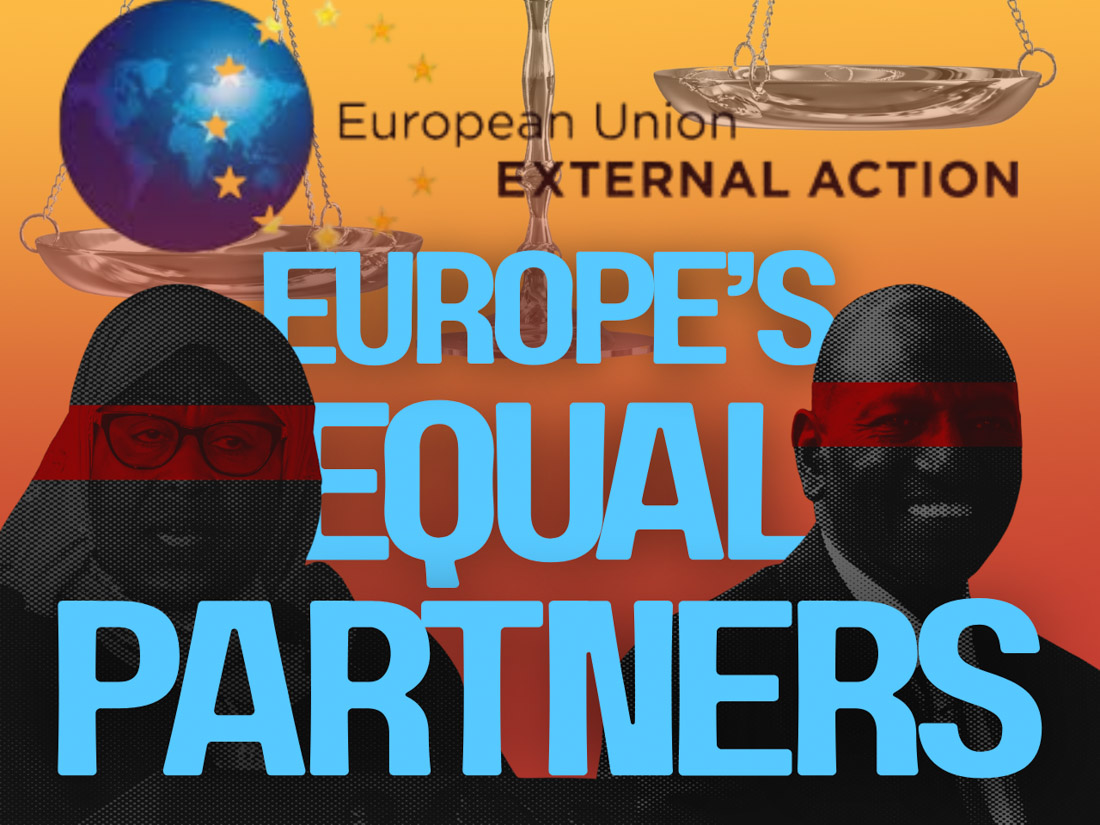
The word ‘equal’, often followed by ‘partner’ or ‘relationship’, or simply used as ‘equality’, appears 68 times in the Netherlands’ Africa Strategy document. This paper, in which “shared challenges, such as security and migration, while promoting investment” are the most prominent points, was launched in 2023 and is intended to guide Dutch dealings with the African continent over the next decade.
Remarkably, in the Dutch and EU “guidelines for strengthening Dutch and EU cooperation with partners in Asia”, also a part of the world that is not traditionally seen as at par with “the West”, the word ‘equal’ appears zero times. Food for thought: are the Dutch mentioning “equality” in their Africa document so often in a desperate attempt to make it true? Or are they paving over what is, especially in combination with “security, migration and investment” (the word “migration” appears 53 times in the Africa policy, versus two times in the Asian one), not much equality at all?
Concerns about migration
Concerns about “migration” alongside promises of “investment” in Africa, easily translate to “we do still want your mineral resources, but we definitely don’t want your people.” Current Dutch and EU policy, such as the training of African migration departments intended to keep citizens inside their home countries, lends weight to this reading. So do the increasing efforts by Western countries to pay African leaders, even oppressors and dictators, to receive and house rejected migrants.
Which leads to the question: who are these “equal partners” really?
The Dutch and the EU, -and let’s not forget the UK, that recently wanted to dump its unsuccessful asylum seekers in police state Rwanda-, face increasing criticism for their ‘equal partnerships’ with African leaders who oppress their own people, and who can arguably even be held accountable for the fact that so many want to leave their countries to seek a future in the West.
Granted, EU leaders have started to hesitate when asked whether they really consider leaders such as Kenya’s Ruto, whose government recently shot scores of people in the street; Tanzania’s Suluhu Hassan, who presided over hundreds of killings by her police; or Uganda’s Museveni, who recently elected himself again amid countrywide kidnappings and disappearances of pro-democracy activists, their “equal partners”. There have even been some careful remarks about possible sanctions here and there, and a recent statement condemning the Ugandan regime’s violence.
But it’s still not much. And such grumblings were recently drowned out again at the Munich Security Conference, where European representatives gave US Secretary of State Marco Rubio a standing ovation after he painted -together with a frightening vision of a white ethno-nationalist Europe - a rosy picture of colonialism and called for new empire building.
If this is to be the way forward, Europe’s partnerships with those African leaders who do its bidding may become even closer. But at what price does this come to the EU’s professed humanitarian values?
Here’s a thought. Could the Dutch and Europe not consider starting dialogues with the groundswell of Gen Z democratic forces, organisations, professionals, activists and budding new leaders who are presently persecuted in African countries? Do they not deserve our equal partnerships?
Or are some partners more equal than others?