There really is Christian genocide in Nigeria, argues Theophilus Abbah
Nigeria’s army readily collaborated with the United States when Donald Trump ordered a Christmas Day 2025 missile strike against what he described as “ISIS terrorist scum” in northwestern Nigeria. It also cooperated in the more recent US-led operation that killed senior ISIS commander Abu-Bilal al-Minuki in the Lake Chad Basin. Yet the Nigerian government still refuses to call a spade a spade when it comes to what many of these Islamist militants regard as their ultimate objective: the eradication of Christians in Nigeria.
When Donald Trump announced late last year his campaign to protect Christians in Nigeria from what he described as genocide, Nigerian elites gleefully cashed in on the global perception that much of what Trump says is, at least, exaggerated and often untrue. Even ZAM magazine published articles that aligned with denialist narratives also advanced by the Nigerian government. ZAM’s editorial titled ‘The Nigerian War of Donald Trump’ argues that “armed groups operate across nearly every region of the country and are motivated by a range of factors rather than a single sectarian or religious cause.” A second ZAM piece, Nicki Minaj’s Genocide, took to task the Trinidadian-American rapper for adding her fame to Trump’s campaign.
The assertion by many, including ZAM, that factors such as poverty, scarce resources, survival, and weak governance are simply key is a common conclusion that shuts down other voices that have complained about the targeted killing of Christians.
This narrative fits the preferred view of the Nigerian government
Again, this narrative fits well with the preferred view of the Nigerian government. Gimba Kakanda, an official at the Nigerian Presidency, wrote on the Al Jazeera Media Network website in October 2025 that speaking of targeted killings of Christians in Nigeria means “ignoring its complexities and manipulating longstanding ethnic and resource-based tensions to advance sectarian agendas.” Nigerians are familiar with the governing elite’s use of abstract expressions such as “complexities,” “resource-based tensions,” and “sectarian agendas” instead of more concrete terms. They prefer to describe the grim reality in euphemisms.
Yes, violence in Nigeria is deeply intertwined with poverty, exploitation, banditry, and insecurity. Widespread poverty leaves millions vulnerable, with limited access to education, healthcare, and employment, pushing many into desperate survival strategies. No doubt these factors create, as I already wrote in a 2013 ZAM Magazine piece, fertile grounds for violence, as marginalised populations see few alternatives to crime or rebellion. However, the targeted killing of Christians, burning of churches, assaults on pastors, and seizure of ancestral lands have deeper historical roots.
Colonial-era hostility
Boko Haram, whose name is popularly translated as “Western education is forbidden,” embodies an ideology shaped by colonial-era hostility to Christianity and Western learning and influence. During British rule, Islamic extremists already denounced Western education — and by extension Christianity — as corrupting influences. The concept of the “book” (“Boko”) became a metonym for Western schooling, which was viewed as evil. This hostility was so entrenched that colonial authorities restricted church construction in some parts of the North to avoid conflict. Muslim leaders feared Western education would erode Islamic values and empower Christian converts, particularly in the Middle Belt and North-East, where missionary schools were active.
Boko Haram’s campaign against Christians is therefore not incidental but ideological, rooted in the belief that Christianity and Western education jointly threaten Islamic identity. The movement has weaponised these grievances, turning schools and churches into symbolic battlegrounds in its effort to “purify” society and establish a Caliphate. The remnants of this ideology persist in several so-called “sharia states,” where Christians have been stoned to death by mobs on allegations of blasphemy, see here and here. Neither state nor federal authorities have held perpetrators accountable.
Land conflicts reflect the historical pattern
Conflict over land in Nigeria’s North-Central region likewise reflects a long-standing historical pattern. Nigeria’s first Premier of Northern Nigeria, Sir Ahmadu Bello, advanced policies that designated land in the Christian Middle Belt — often described at the time as belonging to “heathens” (Christians) — for use as grazing areas for Muslim Fulani herders’ cattle.
Ahmadu Bello was a great-grandson of Shehu Usman dan Fodio, the founder of the old Sokoto Islamic Caliphate, a powerful 19th-century Sunni Muslim empire in West Africa. In the early 1800s, the Sokoto army conducted a “jihad” to conquer the Middle Belt, which was then populated by indigenous communities. These communities, which later adopted Christianity to distinguish themselves from the Sokoto Caliphate, resisted and remained on the land. When, later, dispossessing many Middle Belt farmers of their lands, framed as agricultural modernisation and northern unity, Ahmadu Bello again encountered resistance.
Until today, these conflicts are not simply about poverty or resource scarcity, but are intertwined with religious persecution and demographic engineering. By privileging Fulani pastoralism over Christian agrarian livelihoods, Sir Bello’s policies laid the structural foundations for ongoing violence.
Categories and overlaps
Those who argue against the concept of a “Christian genocide” often lump all violence under the broad rubric of general “terrorist attacks.” However, there are at least six distinct ways to categorise the ongoing banditry and criminality in Nigeria.
- Jihadist violence in the North-East, aimed at carving out a Caliphate in the Chad Basin.
- The Fulani–Hausa conflict in the North-West, largely within Muslim communities, between farmers and herders.
- Fulani militia land-grabbing missions in the North-Central region, targeting predominantly Christian populations.
- Kidnapping for ransom, a nationwide criminal enterprise involving militia networks, transporters, local chiefs, youths providing intelligence to criminals, complicit security operatives, negotiators, and launderers of ransom payments.
- Wiping out of villages by bandits to create space for illegal mining of gold and rare earth deposits in North-West and North-Central Nigeria.
- Separatist agitation in the South-East, primarily driven by the Indigenous People of Biafra (IPOB) movement
While this article focuses on specific anti-Christian violence, there are, as can be gleaned from the above, several overlaps. For example, bandit groups identified as Fulani Muslims are reported to contribute to what some describe as Christian genocide when their militias invade predominantly Christian communities in Nigeria’s North Central states of Benue, Taraba, and Plateau, killing residents, burning homes and churches, and renaming them. A fact-finding committee established by Plateau State Governor Caleb Mutfwang and led by Major General Rogers Nicholas (rtd.) reported in September 2025 that at least 450 Christian communities across 13 Local Government Areas (LGAs) had been destroyed and left desolate over the past two decades. Of these, at least 64 communities have been taken over and occupied by bandits and militants, where they, in Nicholas’s words, now reside “peacefully unchallenged.”
The Fulani militias operate with greater organisation and weaponry
Violence against Christian communities in Northern Nigeria indeed often triggers reprisal attacks, typically directed at Fulani herders who are perceived as the logistical and intelligence backbone of the militias responsible for devastating raids. These retaliatory attacks, however, remain limited in scope and rarely mirror the systematic, large-scale destruction inflicted by Fulani militias. They seldom escalate into organised campaigns of mass killings or the deliberate targeting of Islamic clerics and mosques. The Fulani militias are often described as operating with greater organisation, weaponry, and suspected cover by the military.
“Unbelievers”
Fulani bandits who kidnap Nigerian citizens for ransom often reserve severe punishments for Christian victims. Victims who were released after the payment of ransom have reported disparity between the treatment of Christian and Muslim captives. They were told: “Christians must pay more ransom than Muslims”; “We will kill Christians because they are unbelievers”; and “We will kill Christians because they are spreading falsehood.” Such chilling statements are contained in recollections by survivors, reports from church leaders, and local media coverage of bandit attacks on Christian communities, especially in Kaduna, Katsina, and Zamfara states. Moreover, bandits often target churches and Christian gatherings for kidnappings, such as the abduction of 177 worshippers in Kurmin Wali, Kajuru LGA (Kaduna), which Christian leaders have described as being deliberately aimed at Christians.
The killing of Christians is a cardinal objective
In terms of ideology, many jihadists — from Boko Haram to the Islamic State West Africa Province (ISWAP) — consider the killing of Christians as a cardinal objective. Speeches, sermons, and press statements issued by them unfailingly enunciate this focus. Much of the 529-page The Boko Haram Reader: From Nigerian Preachers to the Islamic State, by Abdulbasit Kassim and Michael Nwankpa, contains remarks that point to jihadists’ desire to destroy Christians. Expressions such as “We are fighting Christians because they are infidels”; “We will kill every Christian we find in this land”; “We will burn every church and destroy every cross”; “We do not want Christians in Nigeria. They are our enemies”; “We will kill Christians because they worship Jesus, not Allah”; “Convert to Islam or die” (shouted during raids on Christian villages), and the like.
Such slogans are often followed by major attacks. Various sources estimate that over 10,000 churches have been destroyed to date. A few examples:
- Christmas Day Bombing, Madalla (2011): On December 25, 2011, a suicide car bomb struck the St Theresa Catholic Church as parishioners were exiting morning mass. The blast killed at least 37 to 44 people and wounded over 50 others. The attack, claimed by Boko Haram, was part of a series of coordinated strikes across northern Nigeria that day, including targets in Jos, Gadaka, and Damaturu.
- Christmas Eve Attack, Pemi (2020): Boko Haram militants raided the Christian village of Pemi in Borno State on December 24, killing at least 11 people and burning down a church.
- Owo Church Massacre (2022): Gunmen attacked St. Francis Xavier Catholic Church in Owo, Ondo State, during a Pentecost Sunday service, killing over 50 worshippers.
- Yelwata Massacre, Benue State (2025): Armed militants attacked the Christian farming village of Yelwata, killing approximately 150 to 200 people in a single night. Witnesses described the attackers surrounding the village and shooting residents as they fled.
- Adamawa Village Raids (December 2025/January 2026) ISWAP militants attacked the predominantly Christian communities of Higa, Mondag, and Timboa. On Monday, 11 Christians were killed, and a church was destroyed. Following these raids, ISWAP issued a statement declaring all Christians in Nigeria "legitimate targets" and offering a choice between conversion, paying a jizyah tax, or death.
- Targeting of Clergy (2024–2025): In September 2025, the Rev. Fr. Mathew Eya was shot and killed by suspected jihadists in Enugu State, while Rev. Fr. Wilfred Ezemba was abducted in Kogi State before being released.
Islamic clerics, mosques, and Muslims are also victims of terrorist attacks. However, terrorists do not regard such attacks as part of their ideology. In an August 2016 message announcing ISWAP’s split from Boko Haram, ISWAP leader Mamman Nur denounced Boko Haram leader Shekau for killing Muslims, but vowed that his breakaway sect would massacre Christians only.
Courageous clerics
Long before President Trump designated Nigeria as a “Country of Particular Concern,” the targeted killing of Christians in Northern Nigeria had already been the subject of sustained public debate. Chief Femi Fani-Kayode, currently Nigeria’s High Commissioner to South Africa, challenged the Sultan of Sokoto, Abubakar Saad III, about the problem in 2019. Several Islamic clerics have also opposed such violence both in action and in their sermons. The late Imam Abubakar— who passed away earlier this year — reportedly opened his mosque in 2018 to shelter Christians from a potential massacre by Fulani militia, earning national and international recognition for his courage. Another figure, Imam Muhammad Nurayn Ashafa, co-founder of the Interfaith Mediation Centre, has spent decades working alongside Christian leaders to mediate conflicts and prevent religious violence. Sheikh Muhammad Nuru Khalid, has also publicly criticised the government for its failure to protect all citizens, including Christians, from terrorist attacks. Sheikh Yahya Ibrahim Masussuka, a preacher based in the North-West, has long advocated for a reorientation in preaching toward fostering tolerance and mutual respect. Similarly, the Chief Imam of a prominent Abuja mosque, Prof. Muhammad Adam, has consistently emphasised that Nigeria’s diversity is a divine gift and that citizens must work collectively to preserve peace across religious lines.
Not a numbers game
Some who deny the targeting of Christians by Islamic fundamentalists in Nigeria often reference statistical data — frequently adjusted to suggest that terrorists and bandits have killed more Muslims than Christians. But the issue cannot be reduced to a simple comparative ratio of Muslim versus Christian casualties.
It also cannot be addressed through symbolic or incidental gestures, such as President Trump’s Christmas Day 2025 bombing of a suspected terrorist enclave in Sokoto State, or the more recent killing of a senior ISIS commander in the Lake Chad basin. In fact, recent reports show that bandits intensified attacks on Christians since Nigeria was designated a Country of Particular Concern by Trump, even escalating kidnappings. Likewise, on the day of Trump’s early-morning announcement that ISIS second-in-command al-Minuki had been killed, militants once again abducted 42 students from primary and junior secondary schools in the Askira-Uba Local Government Area of northeastern Borno State. The community borders Chibok, a predominantly Christian town where Boko Haram abducted 276 schoolgirls from the Government Girls Secondary School in 2014.
Neither the air strike nor the assassination dismantled any networks or persuaded anyone to abandon their hatred. Instead, both left already vulnerable communities even more exposed.
The Nigerian government’s strategy has been contradictory and weak
The Nigerian government’s strategy for dealing with the scourge has, at best, been contradictory and weak, and at worst, disingenuous. Former President Muhammadu Buhari’s 2016 amnesty deal offered to terrorists — which included rehabilitation through psychological counselling, vocational training, and reintegration into society — backfired spectacularly when some applicants simply returned to Boko Haram after undergoing the training. Concomitant deradicalisation programmes have likewise been futile.
The reason for this is probably that none of these efforts has addressed the root causes of frustration and hatred, namely, poverty, governance failures, lack of public services, corruption, and the theft of taxpayers’ money by political leaders.
Yet, instead of seeking to inspire hope for a better Nigeria, the same political leaders have continued to make deals with hardened warlords, while some in government have even been proven to pass intelligence to these very warlords. Recently, the Governor of Katsina State in North-West Nigeria stated that bandits accessed intelligence information from the government and used it to work against peace. The sincerity of many in government is also questioned because of the sheer volume of state contracts awarded to military contractors, from which many intermediaries, including individuals within government, benefit.
Hearts and minds
In short, insecurity is crippling Nigeria’s economy, draining funds that should be used to strengthen social services and drive growth, while endless and chaotic battles against bandits and terrorists consume national resources. Instead, our leaders should engage respected Islamic religious leaders in a hearts-and-minds campaign, and support those already carrying out genuine peace efforts, including brave individuals who attempt to protect communities from invaders.
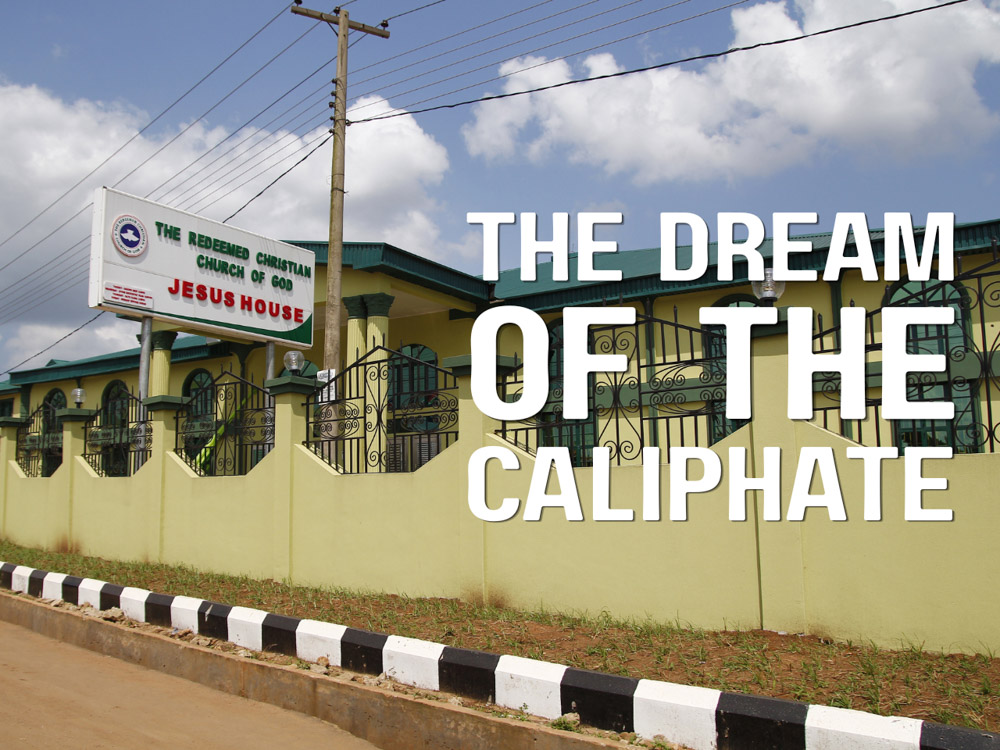
But to counter the rebels’ dream of a new Caliphate, such a campaign would need to offer an alternative dream: one of a society where grievances can be pursued through courts and taxpayers’ money is invested in public services for citizens. However, as long as our leaders manipulate elections to stay in power and loot state coffers, they might as well openly invite terrorists and bandits to continue their war.
Nigeria cannot outsource the solution to Trump or any other foreign power. The responsibility rests squarely with Nigeria’s leaders to protect all citizens, regardless of faith.
Call to Action
ZAM works towards a new equal relationship between Africa and Europe. Contribute to our mission by donating.