
On 22 January, the government of Guinea-Bissau cancelled a controversial Hepatitis B vaccine trial involving 14,000 newborns that was about to start in the capital, Bissau. The cancellation was a victory for those who had raised their voices nationally and globally against the experiment, which was funded by the U.S. Department of Health and Human Services under Health Secretary Robert F. Kennedy Jr, who has become increasingly outspoken against vaccines.
Critics of the Guinea Bissau experiment not only thought that the trial was unnecessary in the first place because the Hepatitis B vaccine has been proven to ward off the often fatal risk in infants and children worldwide, but also feared the project was designed for bias in favour of anti-vaccination outcomes. They warned against its possible use in fuelling 'antivax' campaigns globally and derailing Guinea-Bissau’s plans for a much-needed roll out of the vaccine birth dose in 2028.
International outrage by health activists and the medical community has now led to the cancellation of the trial. But is victory certain? While investigating in Bissau, Samba Baldé encountered silence, confusion, and parents uncertain of what to think.
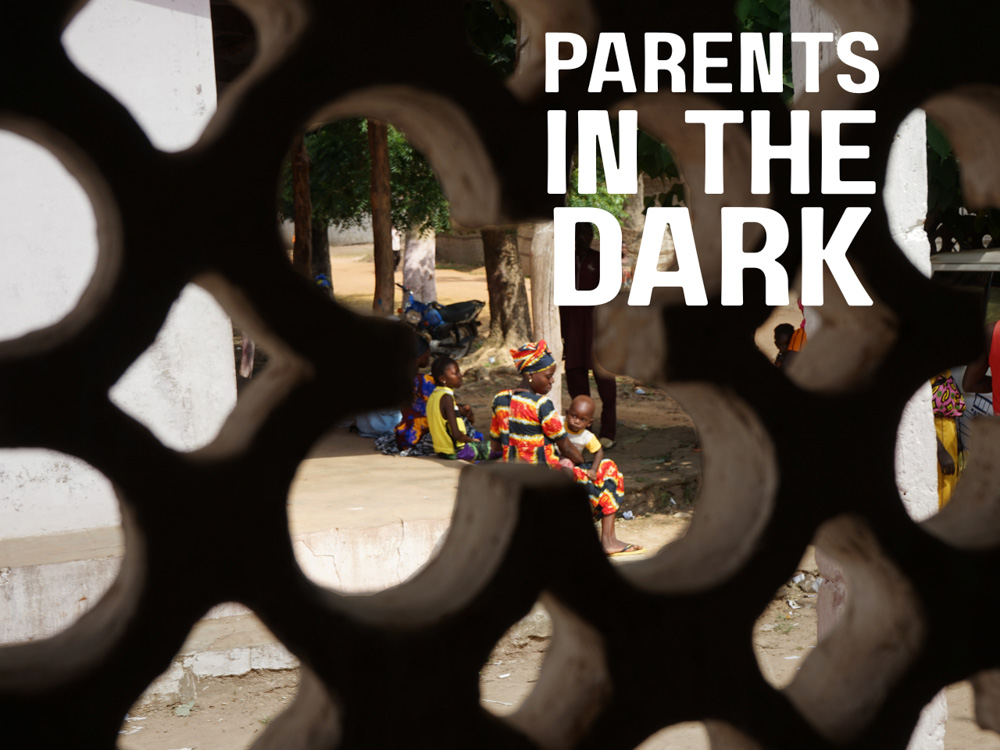
At the Bandim Health Project in Bissau, parents begin queuing with their infants as early as 6 a.m., while it is still dark. Hoping to secure healthcare for their babies at one of the few sites in town where such services are reliably available, some wait quietly, while others exchange fragments of information gathered from radio discussions, social media platforms, and community conversations.
Among them is Vera Vieira, 25, the mother of a five-month-old child. Asked about her reaction to the suspension of a previously announced vaccine trial at this site, she says she is unsure what to believe. “There is a great deal of conflicting information circulating online,” she adds. “It’s frightening.”
TikTok
In recent online discussions, including TikTok broadcasts where healthcare workers, parents, and ordinary citizens engage in open dialogue, one thing is clear: concern about Hepatitis B, a well-known scourge in this resource-constrained healthcare system, is widespread.
Key questions persist. Will infants born to Hepatitis B–positive mothers receive effective vaccines? Where are these vaccines available, and who is eligible to receive them? Are they provided free of charge? Or are there concerns about their quality? More troubling still, some fear whether communities might be subjected to unethical experimentation.
“It’s frightening. I can’t even imagine how mothers with Hepatitis B feel.”
The government has remained silent since announcing the cancellation. The Danish-led Bandim Health Project, which had planned to carry it out at its facility here, has also declined to comment, referring journalists’ questions to the Ministry of Health, which continues to maintain its official silence.
“I can’t even imagine how mothers with Hepatitis B feel,” says Vera Vieira. “They are having to cope with illness without knowing whether a solution is available.” Asked how she manages the silence and the uncertainty, she concludes: “Here, we often act on instinct rather than on information.”
The trial, the Danes, and RFK
The now-cancelled Hepatitis B experiment, which drew significant criticism, was originally designed to run for five years. It aimed to compare outcomes between 7,000 infants who would receive the birth-dose vaccine and 7,000 who would not.
Controlled comparisons between a group receiving a treatment under investigation and a group receiving a placebo are standard practice in medical research. However, the World Health Organization (WHO) has deemed this approach “unethical” in the case of the Hepatitis B vaccine, as no further experimental validation is considered necessary. As the WHO states: “Placebo trials are only acceptable when no proven intervention exists or when such a design is indispensable to answer a critical question of efficacy or safety.”
The WHO’s concern is particularly pertinent to Guinea-Bissau, where Hepatitis B remains highly prevalent and mother-to-child transmission during childbirth is common. In the absence of vaccination at birth, infants face a substantial risk of infection, potentially leading to chronic disease, serious liver complications, and premature death later in life.
Both the Vaccine medical journal and a Danish university have furthermore raised questions about the methods used by the Danish researchers leading the Bandim Health Project in Bissau.
Another source of concern within the international medical community has been the U.S. support and funding of the trial plans under the direction of Health Secretary Robert F. Kennedy Jr., known for his anti-vaccination stance. Medics fear that the trial outcomes may be biased to align with global anti-vaccination campaigns.
It’s not just the parents who are in the dark. By the time I speak to Vera Vieira, I have already tried to put questions about the Hepatitis B trial to the Minister of Health. I have visited the ministry, looking for the press handler, and have been told to come back later.
A printed note
On my second visit, I see Minister Quinhin Nantote walking through the corridor. After I greet him, he returns the greeting with a brief smile. But when I tell him about the scheduled interview, he looks surprised, keeps walking, and says he was unaware of the appointment. When I mention that the subject is the vaccine trial, he turns away and tells me to speak to the press handler.
Knocking on the press handler’s office door, I receive no response. Then another man approaches. He asks what I need, and after I explain, he smiles, gestures me inside, and hands me a printed document signed by the same Minister of Health I had just greeted.
Has Minister Nantote prepared this for me? The note states that the vaccine trial has been cancelled and that the country will maintain the existing vaccination schedule until 2028.
“If funding exists, national relevance of studies may not always be deeply assessed”
The written word “cancelled” on a note bearing a government stamp and the minister’s signature is significant. Cancelled means cancelled. By contrast, the Bandim Health Project, in its only statement so far, has used the word “paused.” The US Department of Health, which has funded the trial at a cost of US$1.6 million, appears to be strongly defending its continuation. According to media reports, US officials are still pressing for it to go ahead, perhaps in a “redesigned” form.
Have the US paid us? Are we giving the money back?
Another element of concern in the note is that the cancellation is said to have been decided for “organizational and logistical reasons.” What will happen when the “organizational and logistical reasons” no longer apply?
When I ask whether I can speak directly to the minister to clarify the contents of the document, the response is immediate: “That will not be possible. No questions regarding the trial vaccination will be answered. This is the official position.”
The notes’ closing paragraph advises citizens to “seek clarification from nearby health institutions if they have questions.” This last bit is almost humorous, since Bandim Health, as well as other health institutions, have already refused to comment on the issue, referring all inquiries back to the ministry.
Paid paperwork
There is much to be learned, however, from what the document does not say. It does not mention the international outrage over the trial, which has been called “unethical” by the WHO and is feared by experts to fuel anti-vaccination campaigns. There is no reference to the scale of the trial, nor any mention of the 14,000 newborns it was reportedly designed to enrol. It does not say how the babies would be selected, or which half would receive the vaccine, and which half would not.
There is also no explanation of how the study was approved in the first place. Sources in the national health sector have told me that our approval systems mostly operate as administrative procedures rather than as strategic or ethical evaluations. “In practice, many studies are treated as paperwork,” one senior health professional at the Hospital Nacional Simão Mendes confided. “If funding exists and documentation is complete, the national relevance may not always be deeply assessed.”
The silence is systemic
The silence in which Guinea-Bissau’s citizens and families find themselves — forced to try to make sense of it all on TikTok — is not unusual; it is systemic. But thanks to reasonable internet access and professional contacts, I am finally able to find some answers. The international outrage has been echoed by reputable medics in the country, some of whom do agree to talk.
Regression rather than progress
Director Katia Barreto of the ENDA Santé Guinea-Bissau clinic is concerned that, because of the controversy around the trial, the Hepatitis B vaccine has now become a subject of discussion. “In other countries in the region and in Europe, this vaccine is given at birth without controversy. Here, it has become a problem because it was linked to a study.”
“The vaccine has become a problem because it was linked to a study”
Barreto notes that ENDA, alongside other health centres, civil society organizations, and several state agencies, has been advocating for the inclusion of the Hepatitis B birth dose in national policy since November 2025. Currently, the vaccine is administered at six, ten, and fourteen weeks, but the birth dose is considered critical. This goal has recently been realized, with the government committing to introduce the birth dose in 2028.
Barreto therefore concludes that the current controversy reflects regression rather than progress. “Scientific evidence remains unequivocal: vaccination within the first 24 hours of life dramatically reduces mother-to-child transmission. Without it, the risk of chronic infection remains high.”
ENDA administers the Hep B vaccine at birth to a limited group of mothers from its Luxemburg-funded CARES 2 project, which focuses on both HIV and viral hepatitis. Barreto says the project has only a limited number of vaccine units and must prioritise mothers who were monitored during pregnancy and confirmed to be infected.
“Trials cannot substitute public health policy”
This scarcity, not only at ENDA but throughout clinics in Guinea-Bissau, explains the queues at facilities associated with the Bandim Health Project. Many families rely on Bandim because they believe the research-linked services offered there may increase their chances of receiving care. But Katia Barreto rejects the idea that research trials should function as substitutes for public health policy. “It is unacceptable that a vaccine of this importance be given by choice and not by right,” Barreto says. “Healthcare must be universal.”
Unanswered questions
The stakes are considerable for the families waiting outside Bissau’s clinics before sunrise. Their children’s health decisions may ultimately be shaped by institutions, policies, and research agendas far beyond their direct control. For now, many of their most basic questions remain unanswered.
Further reading:
CDC funds controversial hepatitis B vaccine trial in African newborns
WHO declares controversial Guinea-Bissau trial unethical
Controversial US-Backed Vaccination Study to Begin in Guinea-Bissau