
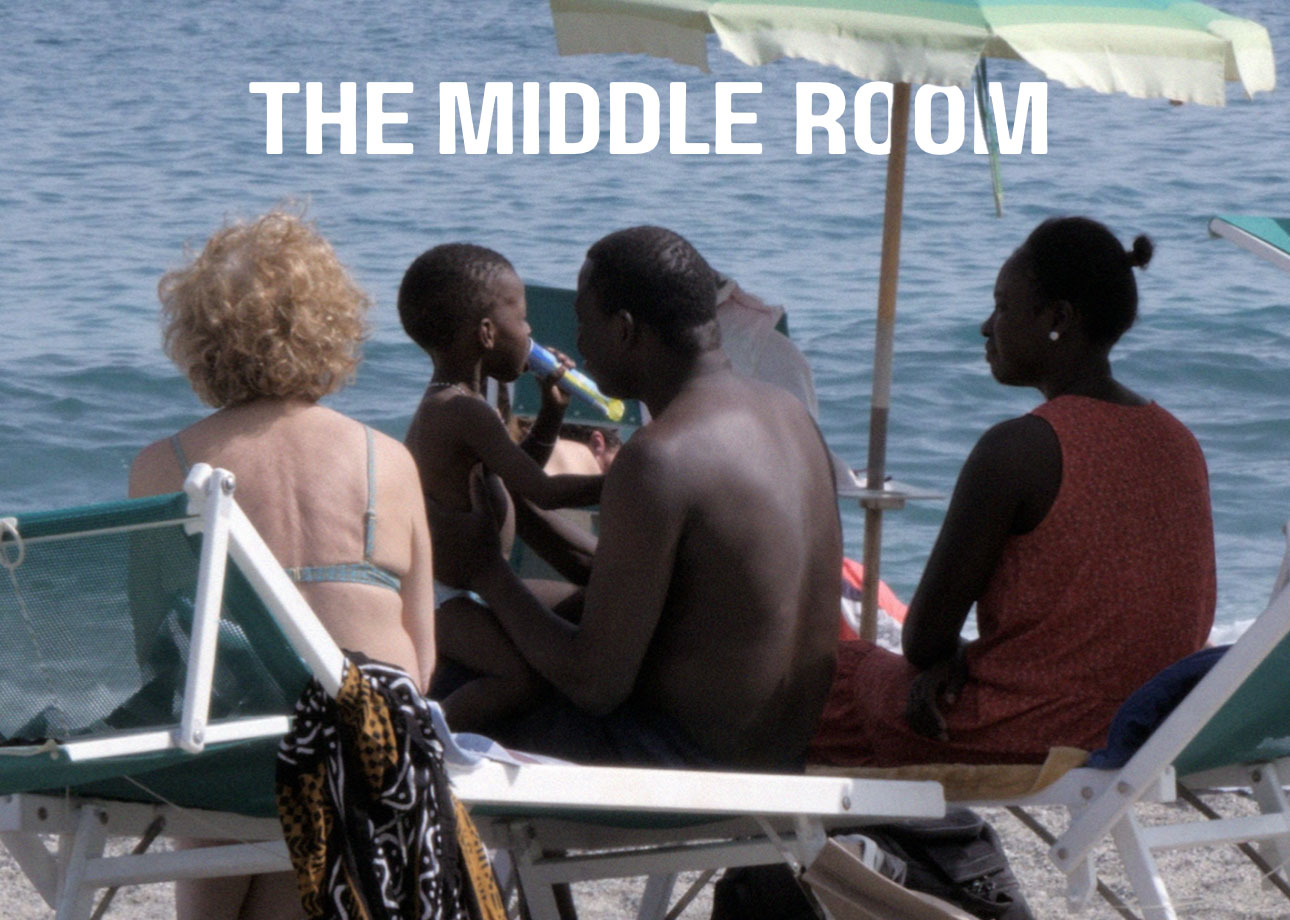
At once touching and tender, The Middle Room is also a difficult film to watch. Not only because it deals with the tricky themes of parenting, invasion of privacy, dependence and the imbalance of power, but because it asks us to sit in a comfy cinema seat and watch the main characters subtly manipulate one another, in close-up detail on the screen.
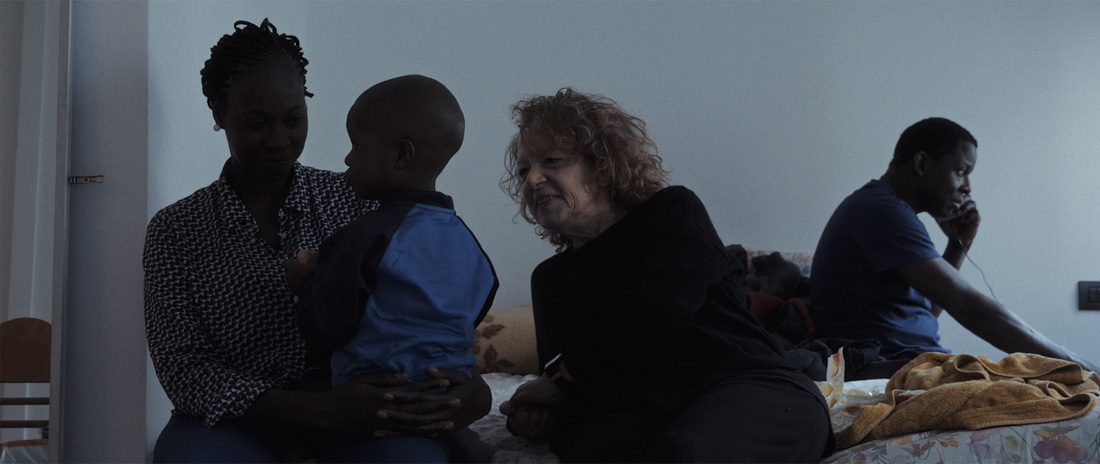
In Enrico Maisto’s film, the camera quietly observes the tensions and joys that unfold as a Senegalese couple and their new born son build a life together with an elderly Italian woman in Milan. Mietta, a retired juvenile court judge, has offered to bring her long-time friend Ibu, his wife Bousso and their baby boy Khadim, into her home. To do so, she buys a new apartment big enough to accommodate them all. An act of generosity that quickly becomes entangled in conditions and negotiations, as each tries to satisfy their own needs.
Manipulation is difficult to witness, but Maisto very cleverly attaches symbolic meaning to everyday scenes in his film, guiding the viewer through a jumble of emotions and seemingly innocuous events. He pegs these symbolic moments like clothes to a washing line, and as the line is reeled in, he asks the viewer to pause and focus on specific incidents in the lives of this uncommon family.
It’s troubling to watch Mietta use the promise of an ice-cream as a bargaining tool in exchange for affection from the toddler Khadim. It’s distressing to see Bousso, the boy’s mother, turn away from this scene and retreat into seclusion and isolation. “Bousso seemed to me the one who paid the higher price for this living arrangement” Maisto explains. “She didn’t want to come to Italy. And yet here we have the dynamics at play of an Italian Lady and Bousso’s African husband, making decisions for her in a foreign land.” Maisto, caught in the middle of these dynamics, found himself empathizing with Bousso. “She was very generous in sharing her feelings with me in unexpected ways. She would say everything is fine, everything is working out, but in such a way that made me perceive that this was not so. That this wasn’t actually the truth.”
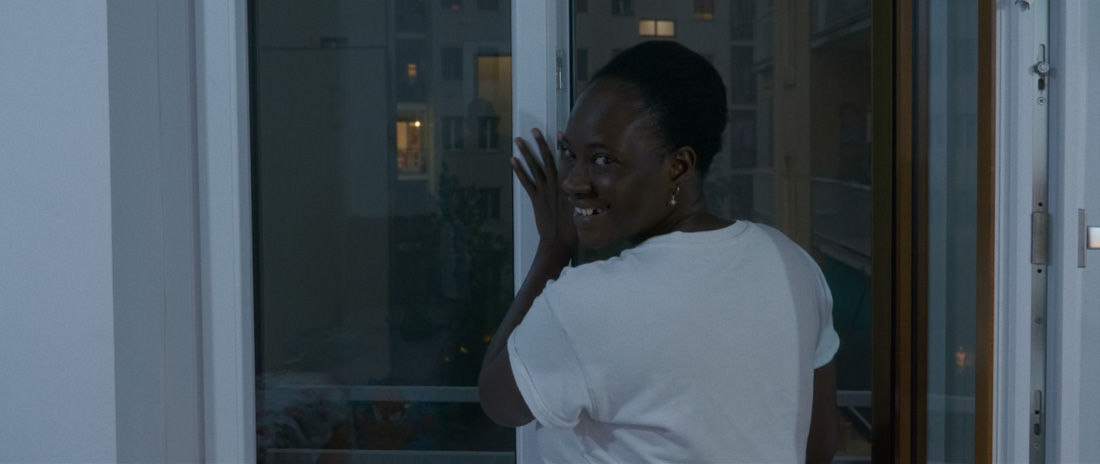
The weight carried by those displaced is emphasised when Bousso shares her wedding video from back home in Senegal with Maisto, and in turn with us, the audience. We see friends, relatives, Bousso’s mother, children and other family members dressed beautifully for the occasion. Bousso looks radiant, with delicate silver ornaments in her hair and silver flashes of make-up accenting her eyes. It is uncomfortable to see her joy and confidence at the wedding contrasted with the withdrawn, joyless Bousso in the Milan apartment.
During moments of tension, the camera acts a voyeur
Maisto’s camera observes as the vicissitudes of life in the apartment grow increasingly tense. Ibu and Bousso live in a section of the home separated from Mietta’s quarters, by a ‘middle’ room. The camera, often placed in this middle room, acts a voyeur. The family are aware that they are being filmed and the discomfort grows as the audience, no longer mere flies on the wall, become voyeurs too.
At this point in the documentary I become acutely aware that I’m viewing the film through European eyes. Why are these people subjecting themselves to this kind of conditional living in Europe? Am I becoming an accessory to the subtle manipulation unfolding on the screen?
Enrico Maisto shares the same apprehension. “It was difficult for me to handle the fact that Ibu’s family were becoming symbols of something that goes beyond them, beyond their intentions” Maisto confides. “I was about to abandon the project. I was scared that their story could be turned into propaganda to be used against them. Or that Mietta would be seen as a monster. I stopped filming for a year and a half.”
After sharing the footage with colleagues, Maisto was convinced to return to the home and continue filming. There he found Khadim much older, playing with a friend. In a raucous but touching scene, Khadim clambers onto Mietta’s lap, hugs her and calls her Auntie. “This made me realise that something fundamental has changed in their relationship” says Maisto.
The possibility of building an unconventional family together
We’re lucky that Maisto did pick up his camera again and continue documenting this relationship, because later in the film, precious insights into the nature of friendship and connection, are revealed. “The film shows the possibility of building an unconventional family together” adds Maisto. “These people in reality appear to be finding answers to issues that society, at least in Italy, is unable to solve. In this arrangement they have found a kind of balance. It’s full of imperfections, full of ambiguities. But it is also full of humanity.”
But how will this ‘balance’ be perceived through Senegalese eyes? During pre-screenings Maisto showed his film to many people including two young Senegalese men recently arrived in Italy by different means. The first took a treacherous journey across oceans, following people-smugglers routes to finally cross the Italian border. “He was really offended by the attitude of the Senegalese family. He could not understand why they accept this arrangement. Both parents work, have income, why don’t they find their own place to live? He was really uncomfortable with this.”
The second man came to Italy to be reunited with his parents. “He didn’t have the trauma of the migrant’s journey” explains Maisto. “He was much more open to accepting ‘the family’ in the film. He could see that they want to stay together, that it’s a very pragmatic choice. They all need each other and they have simply decided to go on living this way. So, he had no moral judgement on their relationship.”
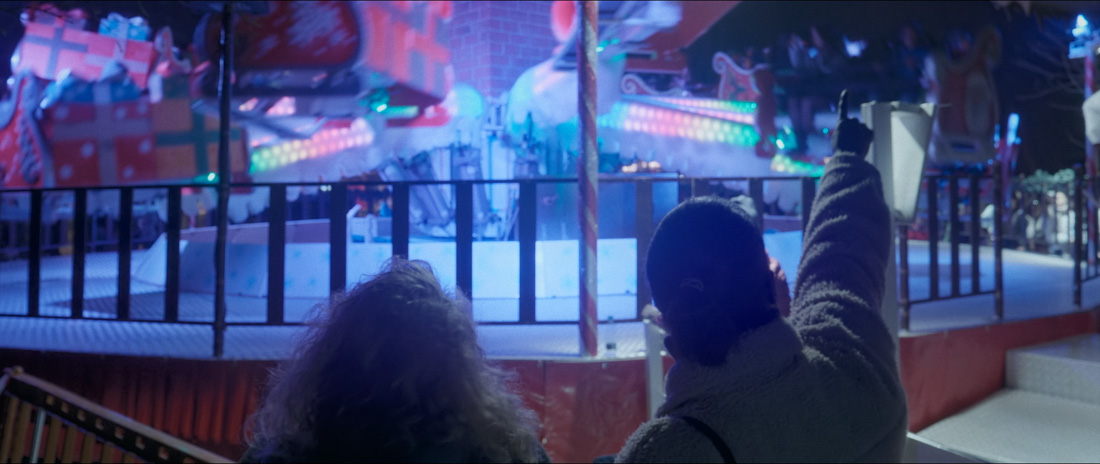
Nine years after the start of filming, I’m really curious to know how Mietta reacted when she first saw the documentary. Was it difficult for her to watch? “We were all together in my home, watching the final edit. Mietta became very upset. The closing scene was kind of shocking for her, because it represents her deepest fear.”
Maisto tells me that Mietta left the room to get some air and smoke a cigarette. He decided to stay behind with Ibu and Boussa. “We don’t understand why she’s so upset” they said. “She’s part of our family now. Even if we were to go back to Senegal, we will take her with us.”
Learning to let go. Learning to accept. The Middle Room shows us the give-and-take required for people to genuinely connect.
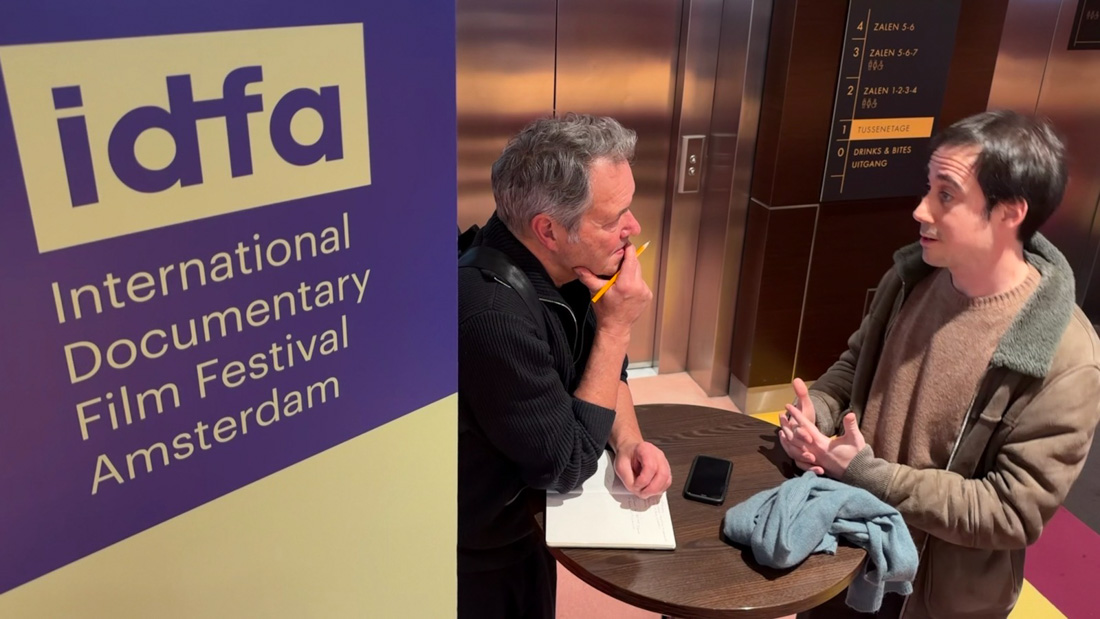
The Middle Room – La Stanza Degli Altri - directed by Enrico Maisto Italy/Switzerland 2026. International Premier 12 – 22 November 2026, IDFA (International Documentary Festival Amsterdam)
Call to Action
ZAM works towards a new equal relationship between Africa and Europe. Contribute to our mission by donating.