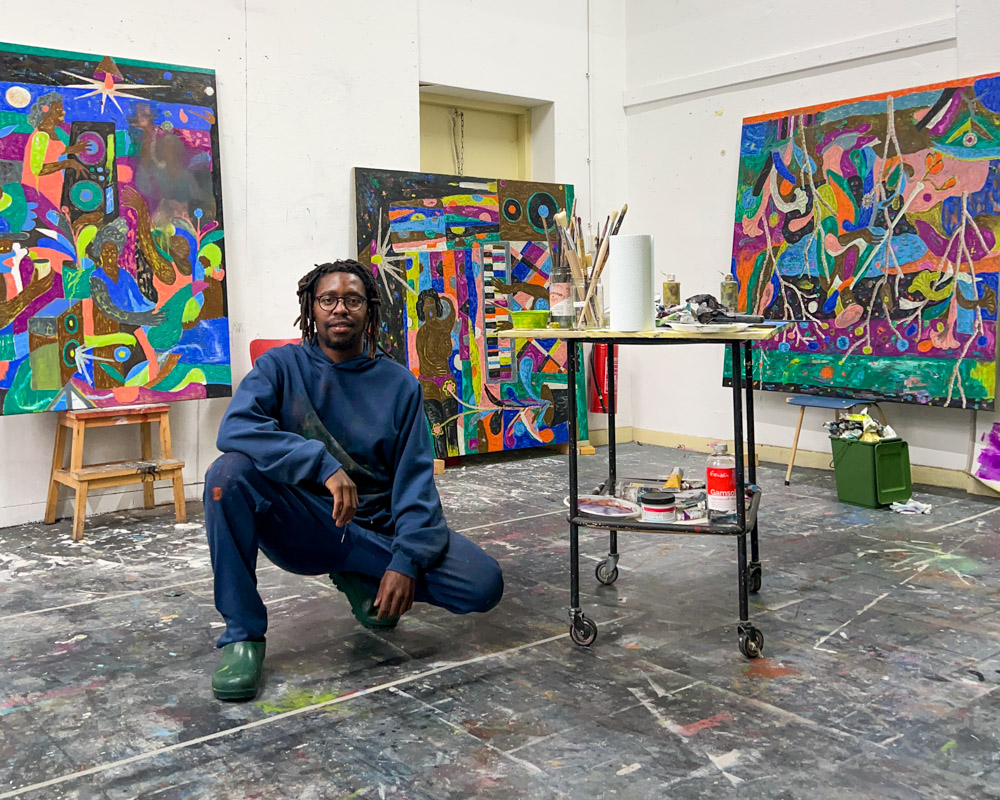
South African artist Simphiwe Ndzube, the new Thami Mnyele Resident in Amsterdam, builds on magical realism, a tradition of writers and storytellers “who do not distinguish between reality and fantasy, or between the imagined and spirituality, particularly in the context of post-apartheid South Africa.” Ndzube’s current artistic practice meditates on Sophiatown, the legendary Johannesburg hub of black culture and music in the 1940s and -50s not just as a thematic subject but as an archive of memories, histories and politics. Fellow South African, art historian, curator and writer Thembinkosi Goniwe interviews Ndzube on a project grounded in historical charge yet driven by an intimate search for home abroad.
Thembinkosi Goniwe: Molo Simphiwe. Can you take us back to where and how you became an artist?
Simphiwe Ndzube: I have always done art, since my childhood. Khanyelina, my mother was supportive and made sure I attended a high school that offered art classes. I then enrolled at Isilimela Comprehensive School in Langa township, where I met a very supportive art teacher, Xoliswa Nkunzi, who encouraged me to join the Frank Joubert Art Centre, which is now renamed Peter Clarke. There, I received encouragement from Lisel Hartman, who said that developing a portfolio strong enough would help me apply to the Michaelis School of Fine Art at the University of Cape Town. During that time, I met my mentors, Peter Clarke and Jane Alexander. They really supported my journey towards the end of high school, through the Art Centre and into Michaelis. I was there for five years. Having lived and schooled in the township, I had to adjust to this big, white institution and learn the language and how to write.
“I had to adjust to this big white institution”
I finished my studies in 2015, took a residency at Greatmore Studios, and also had my first show with WhatIfTheWorld gallery. The success of this show helped me raise funds to move to the US in October 2016. I arrived in Los Angeles during a boom, when many major galleries were moving in, and there was a big community of young artists doing amazing things. Spaces like the BBQ LA, Clubo Pro, and Dalton Wearhouse.—young artists creating artist-run spaces, converting their studios into small galleries, doing experimental work and making braai (barbecue).
TG: You have been in the US since then. I remember you were producing a body of work that was very innovative and exciting. The choices you made in working with materials —exploring mediums that refuse to be simply painting or simply collage—were a mix; you were remixing these different media. The works that were partly freestanding were sculptures but refused to exist simply or entirely as sculptures. Talk about that artistic trajectory?
Refusal to choose
SN: That work came as a result of being in a sculpture programme. Michaelis has this thing of specialising. You choose painting or printmaking; it is not what you would call an interdisciplinary programme. But I started looking at it as a multidisciplinary programme in my head, or it just naturally happened that way. I was not painting; I was in sculpture, but I was still interested in painting. And with not having enough materials or resources, I started looking outside of Michaelis for them. So we would walk around Woodstock, walk around the city, and go to thrift shops and stalls run by old mamas in the township. I would find things I could afford instead of paint materials. Those became the materials I would use for sculpture. But because I still loved painting and still had canvases and paint, I continued painting. I remember Jane Alexander saying, ‘You know, Simphiwe, we are expecting you to produce at least some sculpture since you are in the sculpture class. At the end of the year, you cannot just have paintings.’
So this mixed-media work came from me not wanting to give up painting and just do sculpture. I found a way to bring the two together, and it happened very naturally. I was also looking at what artists who went through the same training program had done, artists like Mawande Ka Zenzile, Nandipha Mntambo and Mohau Modisakeng. This refusal to choose, but also to bring all these languages together—which was something I, at the time, had the energy to do—to connect, make different kinds of things and bring them together felt exciting. Of course, I was interested in artists like Wangechi Mutu, and really fascinated by her practice and how she was thinking about the continent, its stories and the diaspora. That is how that work came about.
TG: Fascinating. I am drawn to the notion of interdisciplinary work and of bringing different languages and mediums together. Looking back, and now that you are advancing your artistic project by refining it, taking it to a different level, or even having terminated or suspended it, how would you characterise it? Is there a phrase or a name for that body of work?
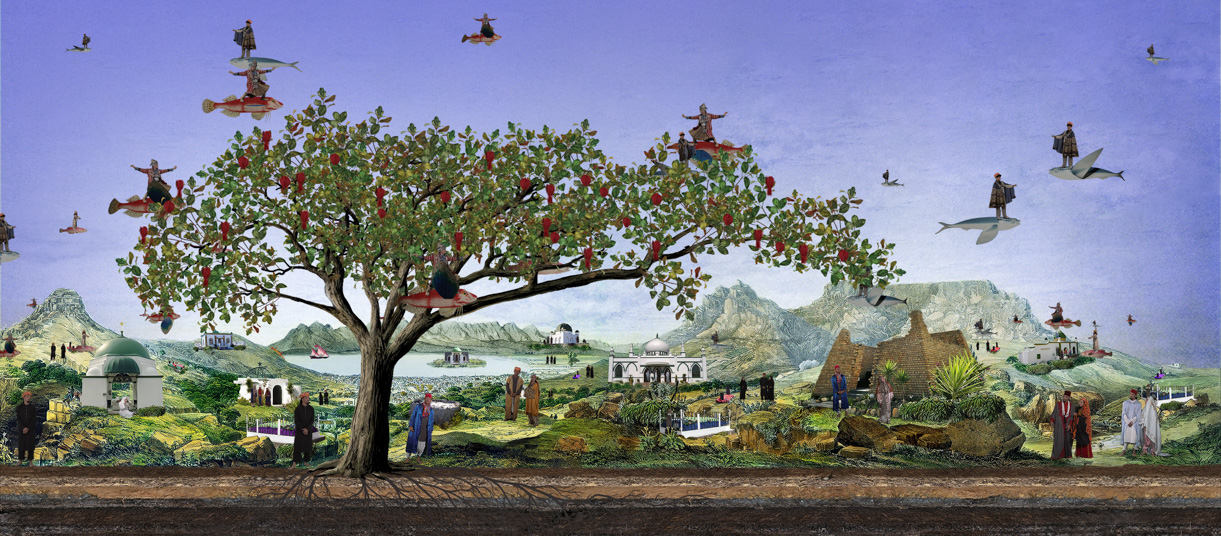
SN: I did actually operate within a framework in my head when I was making that work. I was very interested in, for instance, magical realism. That kind of frame helped me find other contexts: writers and storytellers who were able to tell stories that do not distinguish between reality and fantasy, or between the imagined and spirituality, particularly in the context of post-apartheid South Africa, where the reality of the past is still present and inflected with the wisdom of indigenous practices and ritual. Somehow, with all those topics, I was able to acknowledge those spaces within the framework of magical realism.
Truth and fantasy are debated especially in anti-colonial and post-colonial writing
TG: It makes sense to hear you say it in such an articulate way. There is the real; there is also fiction. There is tangibility, but there is also spirituality. Truth and fantasy, be they real or imagined. All of these are debated much more in the literature, especially in anti-colonial and post-colonial writing. It really helps place that work within that discourse. Sometimes artists tend to work in isolation from writers and musicians. Hearing this makes it quite exciting.
SN: I remember being at the African Studies Library at UCT. I remember browsing the books and seeing all these names that looked like I should know them, because they were not the material we were being given at Michaelis. I bumped into Zakes Mda. I was in the section where his books were all lined up, and I thought, ‘This big man—I must know his work. How come I don’t know him?’ I picked up Ways of Dying (1995).
TG: That is a beautiful book. Of all his books, that is my favourite. The mourner, Toloki, is intriguing.
Touching on all polarities
SN: Yes, Toloki, the professional mourner. That book triggered a way of thinking. It is exaggerated, but it is equally real. It is exciting, but it is also tragic. He was touching on all the polarities I really liked. That influenced the way I began thinking about what magical realism is and does.
TG: Another question: now that you are at the Thami Mnyele Residency, what do you make of the artist and thinker Thamsanqa Mnyele’s politics? He was so charged that, as an activist in exile, he became an ANC guerrilla. He is one of those artists who espoused the notion of art and politics—art and activism, struggle art, or art as a weapon of the struggle. What is your take on Thami’s philosophy and practice?
Bra Thami also connected to Amsterdam
SN: Thami Mnyele remains, in many ways, a mystery to me, as do his politics. I am returning to his work and ideas. Pauline Burmann (of the Thami Mnyele Foundation) explained that Thami had visited Amsterdam, and that his last visit, just before he passed, was here. He went to the Rijksmuseum and found connections and references for his work. It became very clear that, given what happened to Bra Thami, it made sense to honour him in this way, because he had already, in his own way, connected to Amsterdam.
Sophiatown
TG: As we talk about Thami, politics and Amsterdam, where would you locate your art now? Where are you in 2026?
SN: The more I listen to the news and read about the state of the world, the more I realise I want to stick to my own trajectory. I want to stay with a subject matter I can control, and that would not easily sway me—especially living in the US, where the news constantly comes at you, moves you off your centre, makes you want to be angry and responsive all the time. It is an endless pounding, without choosing a space of numbness.
I am looking into South Africa again, specifically the period of Sophiatown. I am trying to find connections with people and artists who lived outside of South Africa—the exile artists. Miriam Makeba, for example, was tied to Sophiatown, and, like many others, she ended up living in Europe or the US. I am in that experience myself. I started asking: how did my ancestors live this life—thinking about home, making music and practising art outside of South Africa?
Jazz and music became an entry point
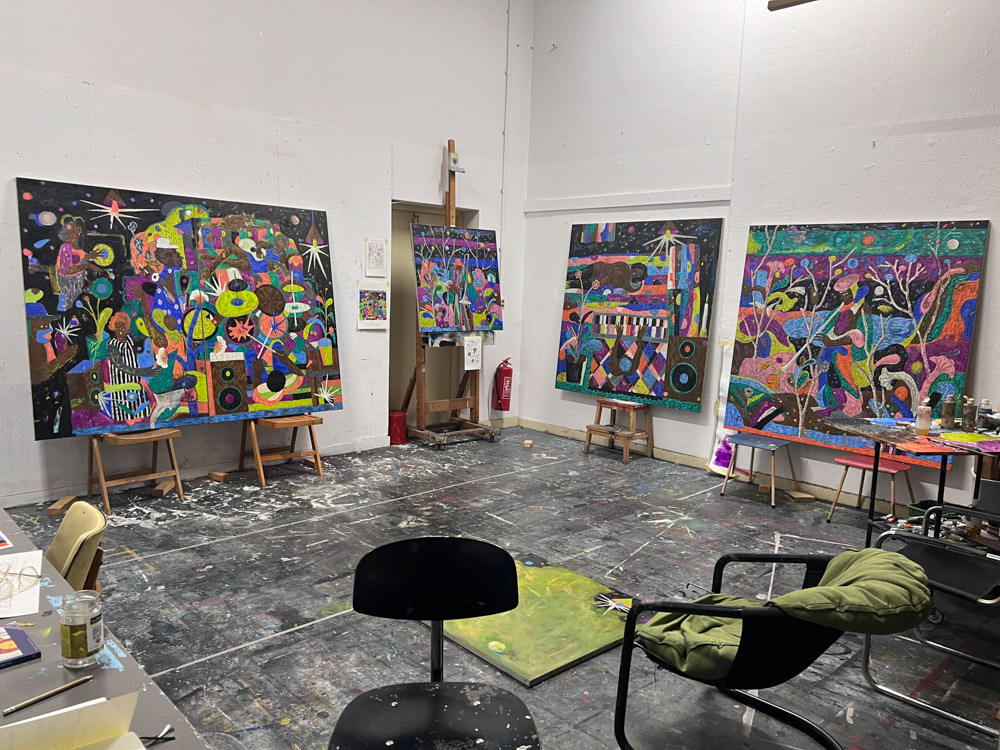
Jazz and music became an immediate entry point. These are the people who came out of that space. Sophiatown was the birthplace of popular culture in Mzansi. How can I learn about that period, its politics and the people who shaped it—something that formed the foundation of South African culture and music? That is where my work is now. I am interested in a slower, more solitary space—the pace of jazz—and in connecting more deeply with the work. I have shifted my practice towards oil painting.
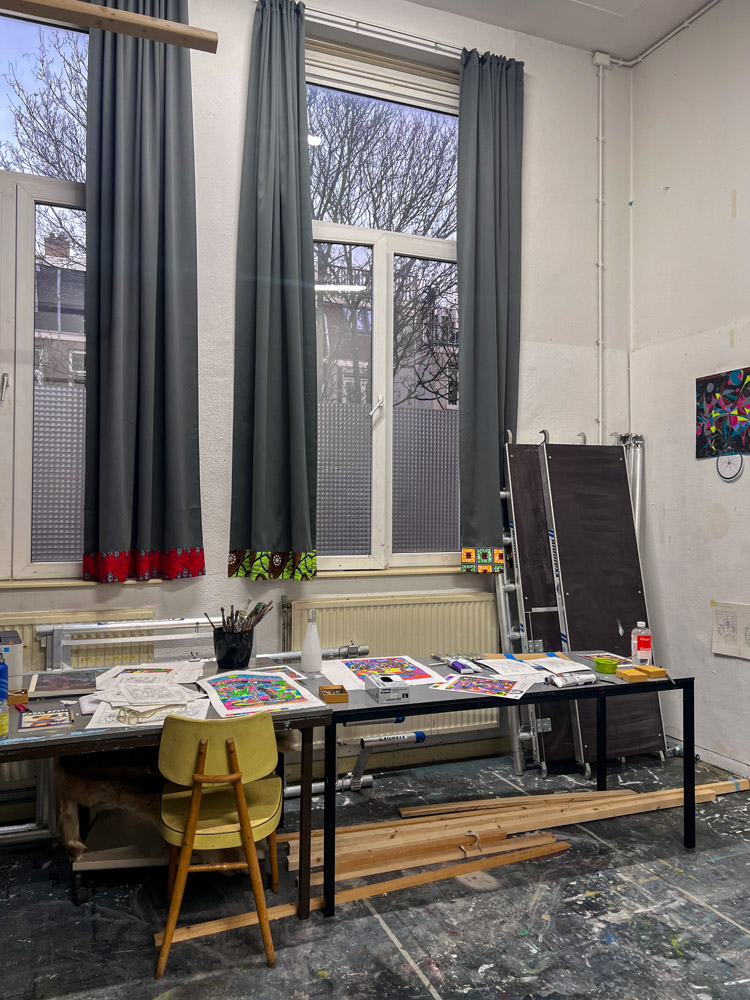
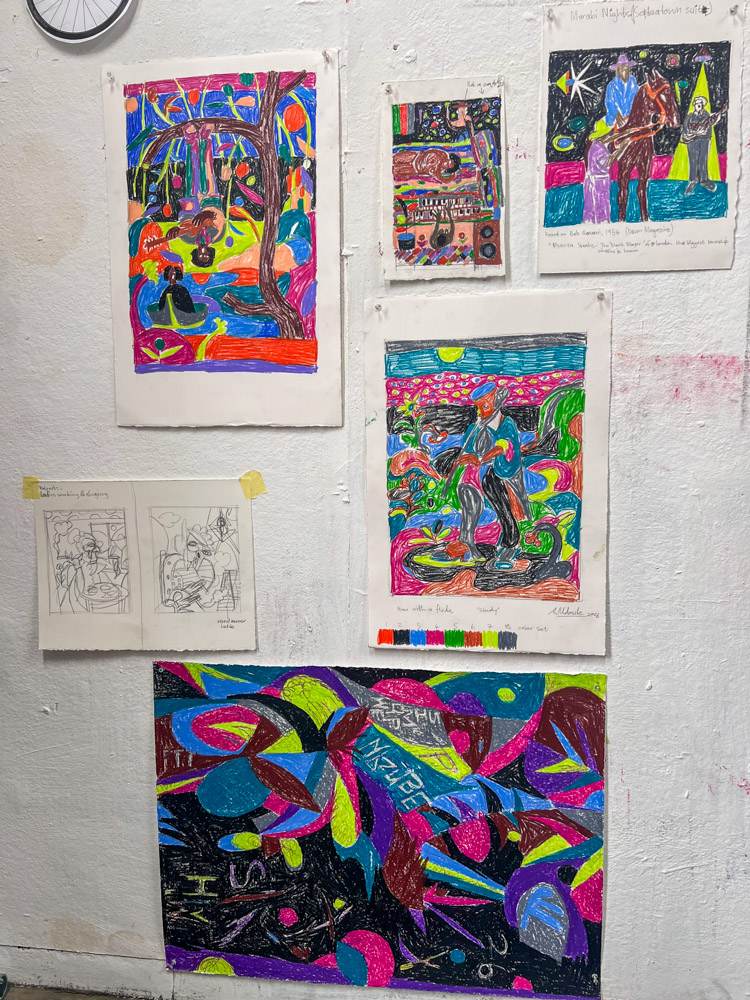
There is something I have been trying to understand through painting, something I want to get out of it. The collage, sculpture and painting made the work into an object. It was not just a narrative; it came to you and demanded different ways of engaging. Because it has clothes in its visual and material domain, because it is alive, it pulls you in. There was an experience for the viewer that went beyond my storytelling or my politics. With this new period of working in oil painting, I am trying to figure out how to make it an experience rich enough to stand on its own, without relying on story or narrative.
A politically charged history
TG: Would you see this work as more personal or more political, or does it fuse the two?
SN: I think it is fused. It is more personal than political, but it emerges from a political space. I am looking at real people—photographs of Bra Hugh Masekela in the 1950s and 1960s, Drum magazine, and images by photographers like Jürgen Schadeberg, Peter Magubane, Bob Gosani, Alf Kumalo and Ernest Cole. I am collecting their books and looking at actual stories that can connect to what I am searching for. I am looking for a sense of home, not just imagining it. I pull certain elements from there and translate them in my own personal way. They come out of a politically charged history.
Call to Action
ZAM works towards a new equal relationship between Africa and Europe. Contribute to our missionby donating.