In late 2025, South Africa’s participation in the 61st Venice Biennale was placed in doubt when the Minister of Sport, Arts and Culture, Gayton McKenzie, withdrew departmental support for Elegy, the pavilion work by Gabrielle Goliath selected through an independent process. The Minister cited political and diplomatic concerns about the work, which mourns women victimised by racial-sexual-political violence in South Africa, Namibia and Gaza.
An urgent application challenging his authority to cancel the work was heard in the North Gauteng High Court on 11 February, with the Campaign for Free Expression admitted as amicus curiae. Fellow South African artist Heidi Sincuba examines the broader questions raised by the dispute.
There are disputes about art. And then there are disputes that expose the nervous system of an entire democracy. The case before the High Court of South Africa, Goliath and Others v Minister of Sport, Arts and Culture and Others, arises from the withdrawal of Elegy, created by Gabrielle Goliath and curated by Ingrid Masondo, from the 61st Venice Biennale. Beyond questions of procedure lies a more difficult issue: should the state retract its endorsement of an artwork because of what it mourns?
Court record
On 6 December 2025, a high-profile, independently appointed selection committee comprising Professor Nomusa Makhubu, a leading art historian; Molemo Moiloa, artist and co-director of the Johannesburg-based collective MADEYOULOOK, which represented South Africa at the 59th Venice Biennale in 2022 with a critically acclaimed exhibition interrogating land, race and colonial archives; Tumelo Mosaka, an internationally recognised curator; Dr Greer Valley, scholar and cultural practitioner; and Sean O’Toole, prominent writer and critic, unanimously selected Elegy for the South African Pavilion.
On 22 December, Gayton McKenzie, Minister of Sport, Arts and Culture, and leader of the pro-Israel, far-right party Patriotic Alliance, objected in writing, calling the work “highly divisive” because it “centres on the subject of Palestine” and concerns “an ongoing international conflict that is widely polarizing,” warning that if termination were not possible, “the Ministry will withdraw its association from the exhibition.” Almost three weeks later, after much public outrage directed at the censorship, McKenzie added another argument, stating on 10 January 2026: “it was brought to my attention that a foreign country had allegedly undertaken to fund South Africa’s exhibition,” and that this “raised alarm, as it was being alleged that South Africa’s platform was being used as a proxy by a foreign power to endorse a geopolitical message about the actions of Israel in Gaza.”
“Unlawful and unconstitutional”
In a public statement on 8 January 2026, the selection committee had already reaffirmed their commitment to “uphold integrity and accountability throughout the decision-making process.” Following the withdrawal, the artist-curator team filed an urgent application in the Gauteng High Court, arguing the decision was unlawful and unconstitutional. They maintain that the unanimous selection constituted administrative action under the Promotion of Administrative Justice Act (PAJA) 3 of 2000 and could not be undone without lawful review.
The Minister contends that participation in Venice falls within executive authority under Section 85 of the Constitution, rendering the committee merely advisory. Central to the dispute is the Minister’s 22 December letter, annexed to the founding affidavit. It advances a single, content-based objection and raises no other irregularity. As the affidavit notes, “Neither of these items of correspondence query, or make any reference whatsoever to funding by a foreign country or foreign power.” That explanation surfaced only later. Under PAJA, a decision stands or falls on the reasons given at the time; subsequent justifications carry little weight.
Political sanction
The state argues the matter is moot because the 6 February 2026 submission deadline has passed. The applicants respond that constitutional review is not extinguished by an expired timetable. They say the case squarely engages Section 16(1)(c), which protects “freedom of artistic creativity,” and ask whether that guarantee limits ministerial intervention when expressive content is at issue. The Minister stubbornly continues to frame his conduct as cultural diplomacy, not censorship.
Inside the court record, the facts settle into sharp relief. Time is weaponised. The objection was issued just before the holidays, constricting and complicating response times, deliberately or not. Deadlines continue to loom and pass while the minister threatens “withdrawal.” The language suggests political sanction rather than juridical reasoning. His letter alleges no defect. The objection is not that the work failed, but that it divides. The intervention was pre-emptive and ideological. Constitutionally, that distinction may prove decisive.
“Art is a dangerous pursuit”
A work about not forgetting
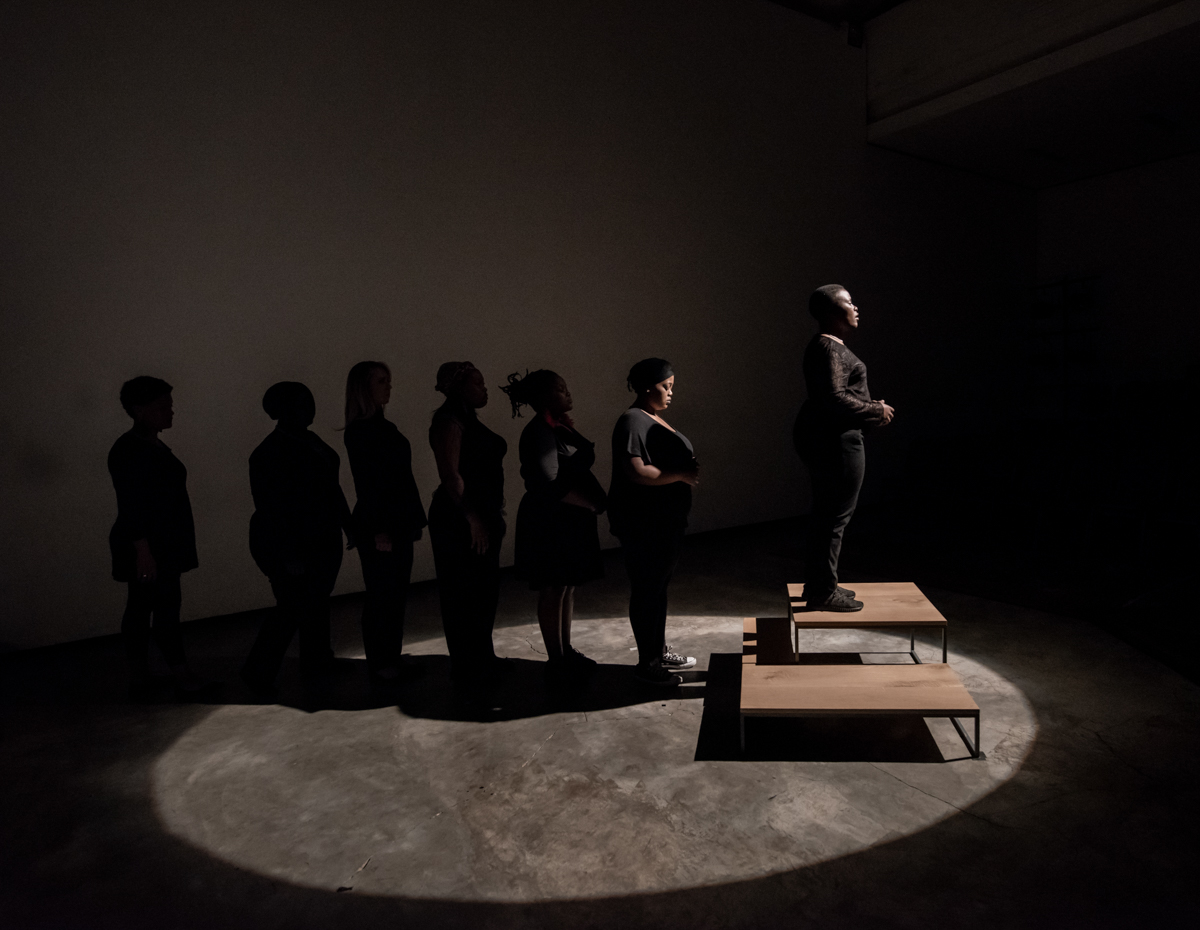
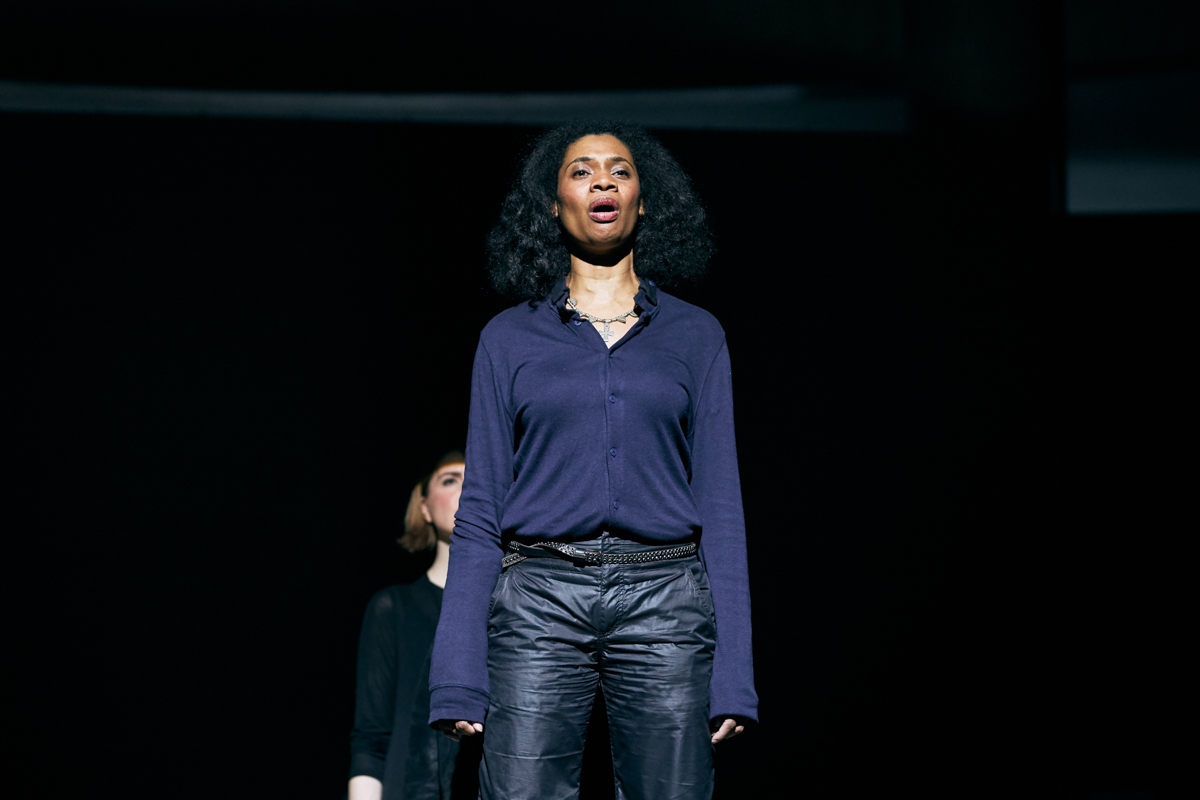
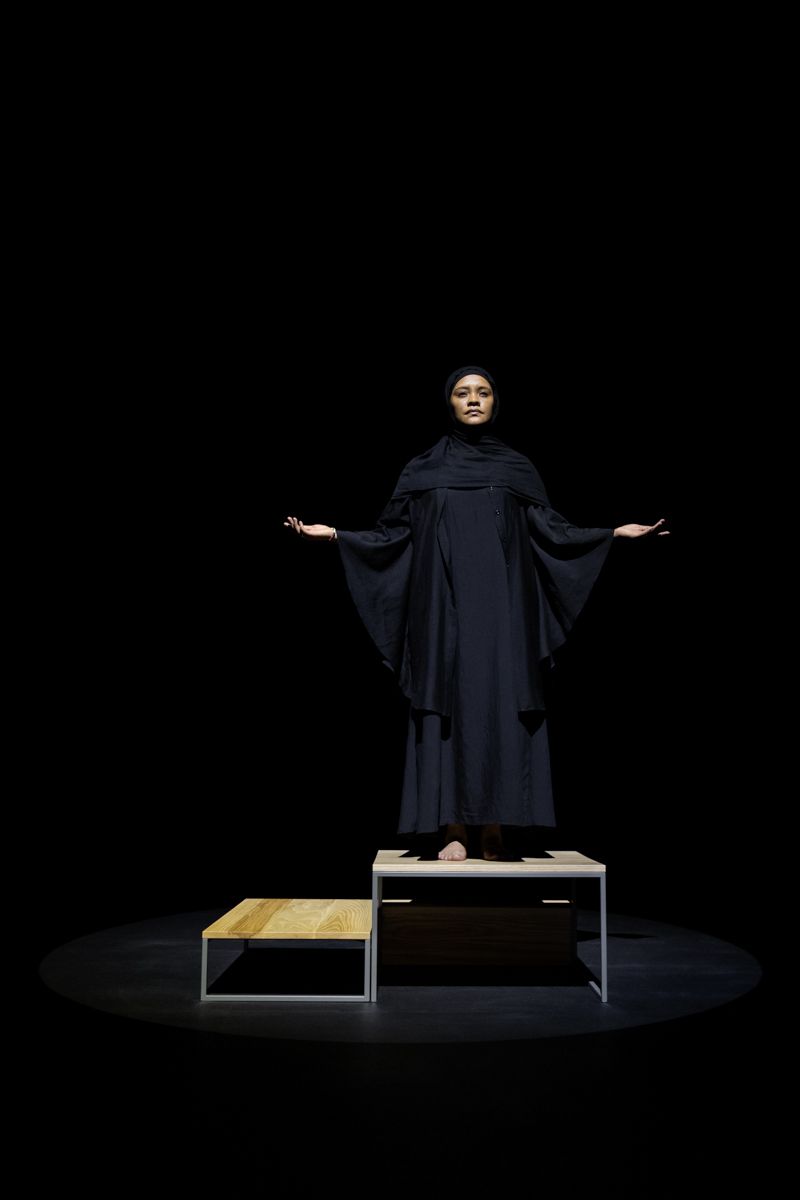
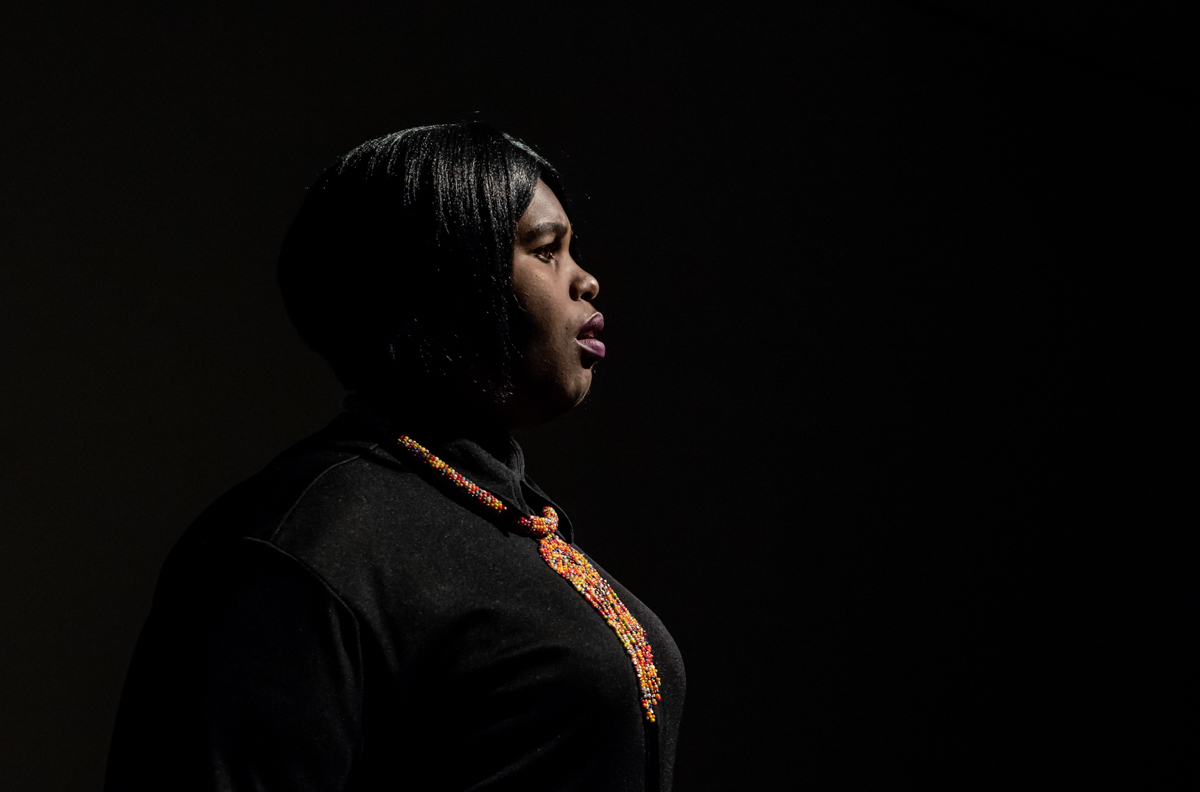
Lest we forget, this dispute started with a work of art. A work about not forgetting. Elegy is an ongoing ritual lamentation that Goliath has developed over more than a decade. Vocalists stand on an illuminated dais and sustain a single note, breath passing from one body to another. It is spare, embodied, durational. It unflinchingly keens for victims of racial-sexual-political violence.
For Venice 2026, three suites were proposed: one mourning Ipeleng Christine Moholane, a 19-year-old South African journalism student who was raped and murdered in Johannesburg in 2015; one honouring Nama women killed during the German colonial genocide of the Ovaherero and Nama in Namibia in the early twentieth century; and one grieving Palestinian poet Hiba Abunada, who was killed in an Israeli airstrike on her home in Khan Younis, Gaza, on 20 October 2023. It was this third suite that drew ministerial objection, before a single note had been sounded.
In an exclusive interview with ZAM Magazine, the team behind the project reflects on the egregious attack on creative expression with sheer disbelief. Masondo remarks, “In the last few weeks, I have so often been reminded of Toni Morrison’s assertion that art is a dangerous pursuit … What has struck me has been how just the idea of this work, Elegy — for a poet, was perceived as a threat.” She adds: “It is heartbreaking to think that a call to grieve the lost life of Hiba Abunada, and her young son, should be so unthinkable.”
The cancellation has not been abstract. It has been somatic.
“It has been a period of profound distress”
“It has been a period of profound distress, exhaustion and contemplation,” Masondo tells me. “To remain hopeful and focused on the work has required a gruelling kind of discipline.” And yet she resists reducing the experience to injury alone. “The journey has been reparative, a process of healing made possible by the labour of our team and friends, and the singers who said yes to making Elegy – for a poet in this challenging moment, refusing to be silenced.”
As we spoke, the work had just been performed and filmed at the Homecoming Centre in Cape Town’s District Six. Masondo describes that week as “a much-needed sacred week of gathering, creating, mourning, and healing together.”
A fundamental threat
When asked about the public outcry, Goliath responded, “I don’t think any of us expected this kind of pushback upfront, certainly not in the South African context. But on reflection, it’s really not surprising at all.” The artist is cognisant of the moment’s paradoxical nature. “One feels isolated, of course, and yet I have also felt a profound sense of care, of being held and supported by so many,” she says. “Those messages of support, flowers on the doorstep, expressions of solidarity. All these gestures of care that demonstrate something of the tenuous but beautiful kinships we hope to activate in this work.”
“It’s in moments like these that those underlying relations and commitments really surface and make themselves felt. That we, as an artist-curator team, are even in a position to take a Government Minister to the High Court is testament to the proactive support and solidarity of others. Heading our legal team is Adila Hassim SC, who has played a key role in South Africa’s case against Israel at the ICJ. She, like other friends and allies, quickly realised the grave implications such a cancellation would have, not only in terms of censorship and ministerial misconduct but within a broader political context in which, for all its contradictions, South Africa has held a principled line, calling out apartheid and genocide on the international stage,” said Goliath’s studio manager, James Macdonald.
The reverberations have not been confined to South Africa. “The project has garnered an incredible amount of international solidarity,” Masondo says, “confirming that the questions raised by Elegy, and by the threat to silence it, carry a profound global resonance.”
Our right to dissent
When asked about the broader implications for art in South Africa, Masondo does not hesitate. “The erosion of freedom of expression is not a niche concern for the arts; it is a fundamental threat to the democratic fabric of our society. (...) We must interrogate the mechanisms of power that seek to define which utterances are ‘challenging’ and which should be suppressed. Art cannot be a curated reflection of state or institutional comfort.”
Goliath contends that “like others, Minister McKenzie has deployed the language of ‘nation-building’ and ‘social cohesion’ in his drive to circumscribe what can and cannot be thought, felt or created, and more explicitly, who can or cannot be grieved after. What is at stake is our right to dissent, to question, to think and dream the world differently. And this is the work of Elegy, as one of decolonial Black feminist refusal and love. I’ve said it before: we cannot imagine and seek to realise a world otherwise if we fail to bear with us those lost to, or still surviving, an order of violence we hope to, and must, transform.”
The shared labour of lungs
In our conversations, the team, bearing the weight of this massive undertaking, did not waver. They spoke with a quiet, resolute faith in the endurance of justice. “Intimidation and censure must not become a precedent here and we are not alone in this conviction,” they assert. That conviction is echoed in public petitions and a joint civil-society appeal to President Cyril Ramaphosa, which characterise the Minister’s intervention as a stark, content-based abuse of executive power that threatens artistic freedom and unravels an independent curatorial process.
Reporting in the Daily Maverick on 10 February 2026 adds a further turn: Minister McKenzie had informed South Africa’s ambassador to Italy, Nosipho Jezile, on 6 February that there would be no replacement and no artwork would be shown at the 2026 pavilion. Yet when this was conveyed to the Venice Biennale Foundation, its representative Joern Brandmeyer confirmed an “availability to keep the pages reserved for the SA Pavilion and to extend the related deadlines until next week,” placing the decision point squarely in the present week.
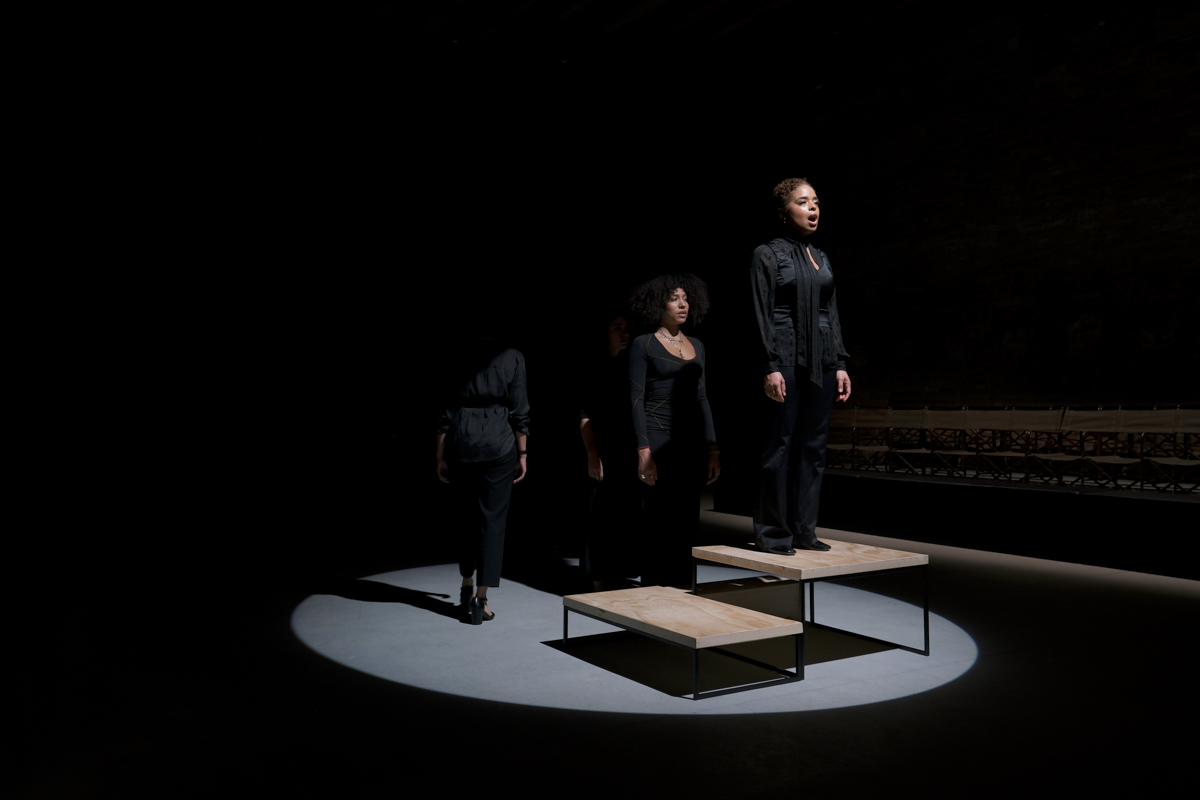
In the yet unquashed Elegy, breath moves from body to body, a fragile continuity carried in the shared labour of lungs. When one voice thins or trembles, another takes up the note, refusing extinction. The work insists on the embodied grievability of lives that structures of power would consign to the margins, restoring them to presence through the simple, radical act of collective breath.
Who gets to decide which lives are worthy of public mourning?
The High Court (and the art world at large) must now decide whether the state may intervene when that insistence proves inconvenient. The legal arguments turn on administrative law, executive authority, and constitutional interpretation. But beneath those doctrines lies a simpler question, one Elegy has long articulated with riveting clarity and courage: Who gets to decide which lives are worthy of public mourning?
For now, the note continues, stubbornly held in suspension between art and authority. In a turn at once perplexing and inevitable, it may not gather beneath the vaulted ceilings of the Venice Biennale but in the austere acoustics of the court of law.
UPDATE: On 18 February the Gauteng Division of the High Court in South Africa dismissed the artists’ case with no reasons given, awarding costs to the minister’s side. In a statement, the artist-curator team said it was “profoundly disappointed” by the ruling. It called the costs order “punitive” and said that the ruling “will certainly discourage others in the arts community from attempting to defend their constitutional rights in court.” The ruling therefore “sets a dangerous precedent”, it said, “jeopardising the rights of artists, curators and creatives in South Africa to freedom of expression – freedom to dissent.” The team added that it was “grateful to our legal team, and to all those who have encouraged us and mobilised on our behalf. We ask that you continue to journey with us, as, in the spirit of Elegy, we refuse conditions of disregard and dare to think and dream the world differently.”
The Campaign for Free Expression also expressed shock over the ruling.
Call to Action
ZAM works towards a new equal relationship between Africa and Europe. Contribute to our mission by donating.